Sober Living: Definition, How it Works, for Whom, How to Choose, Benefits

Sober living represents a vital step in the journey of addiction recovery. These transitional residences provide a supportive and structured environment for individuals who have completed primary treatment for substance abuse. In sober living homes, residents apply the coping skills and strategies learned during treatment while gradually reintegrating into society. The emphasis is on fostering personal growth, accountability, and sobriety in a community setting.
Sober living works as a transition between rehabilitation facilities and independent living. Residents follow the rules, attend counseling sessions, and participate in house meetings to maintain stability and accountability. Peer support is essential, offering encouragement and camaraderie. A study involving 10,000 patients found that 90% of those who attended weekly Alcoholics Anonymous (AA) meetings and participated in aftercare for one year remained abstinent from alcohol, showcasing the effectiveness of structured support in maintaining sobriety.
Sober living is designed for individuals who have completed primary addiction treatment and are seeking a supportive environment to continue their recovery. It offers a safe space away from triggers and temptations, allowing residents to focus on maintaining sobriety while learning essential life skills for independent living. Whether transitioning from rehab or seeking additional support after detox, sober living provides a structured yet flexible environment conducive to long-term recovery.
When choosing a sober living home, several factors must be considered to ensure a successful recovery journey. Evaluating location, structure, staff qualifications, and peer support are essential. By selecting a facility that aligns with individual needs and preferences, residents maximize their chances of maintaining sobriety and achieving lasting recovery.
The benefits of sober living are numerous and impactful. Residents benefit from a supportive community, accountability measures, and opportunities for personal growth. By participating in sober living programs, individuals experience improved physical, mental, and emotional health, enhanced relationships, and a greater sense of purpose and accomplishment.
What is Sober Living?
Sober living serves as a crucial transitional phase for individuals recovering from addiction. It provides a supportive and substance-free environment where individuals apply the skills learned during treatment while gradually reintegrating into society. These homes offer a structured yet flexible setting, encouraging residents to attend 12-step meetings, participate in counseling sessions, and contribute to household responsibilities.
According to Polcin D. L. et al. 2008, “A Clean and Sober Place to Live: Philosophy, Structure, and Purported Therapeutic Factors in Sober Living Houses,” in sober living homes, residents benefit from constant guidance and support from peers and on-site staff, fostering meaningful relationships and accountability. The emphasis on life skills development, including budgeting, employment-seeking, and personal hygiene, equips individuals with the tools necessary for successful independent living. Furthermore, sober living programs mitigate the risk of relapse by offering a safe and sober space away from triggers, thereby facilitating a smoother transition back into everyday life post-treatment.
Did you know most health insurance plans cover substance use disorder treatment? Check your coverage online now.
How Does Sober Living Work for Addiction?
Sober living programs are an essential component of the continuum of care for individuals recovering from addiction. According to Polcin D. L. et al. 2010, “Sober living houses for alcohol and drug dependence: 18-Month outcomes,” SLHs are alcohol- and drug-free living environments that support abstinence by emphasizing involvement in 12-step groups and social support for recovery.
1. Transitional Support
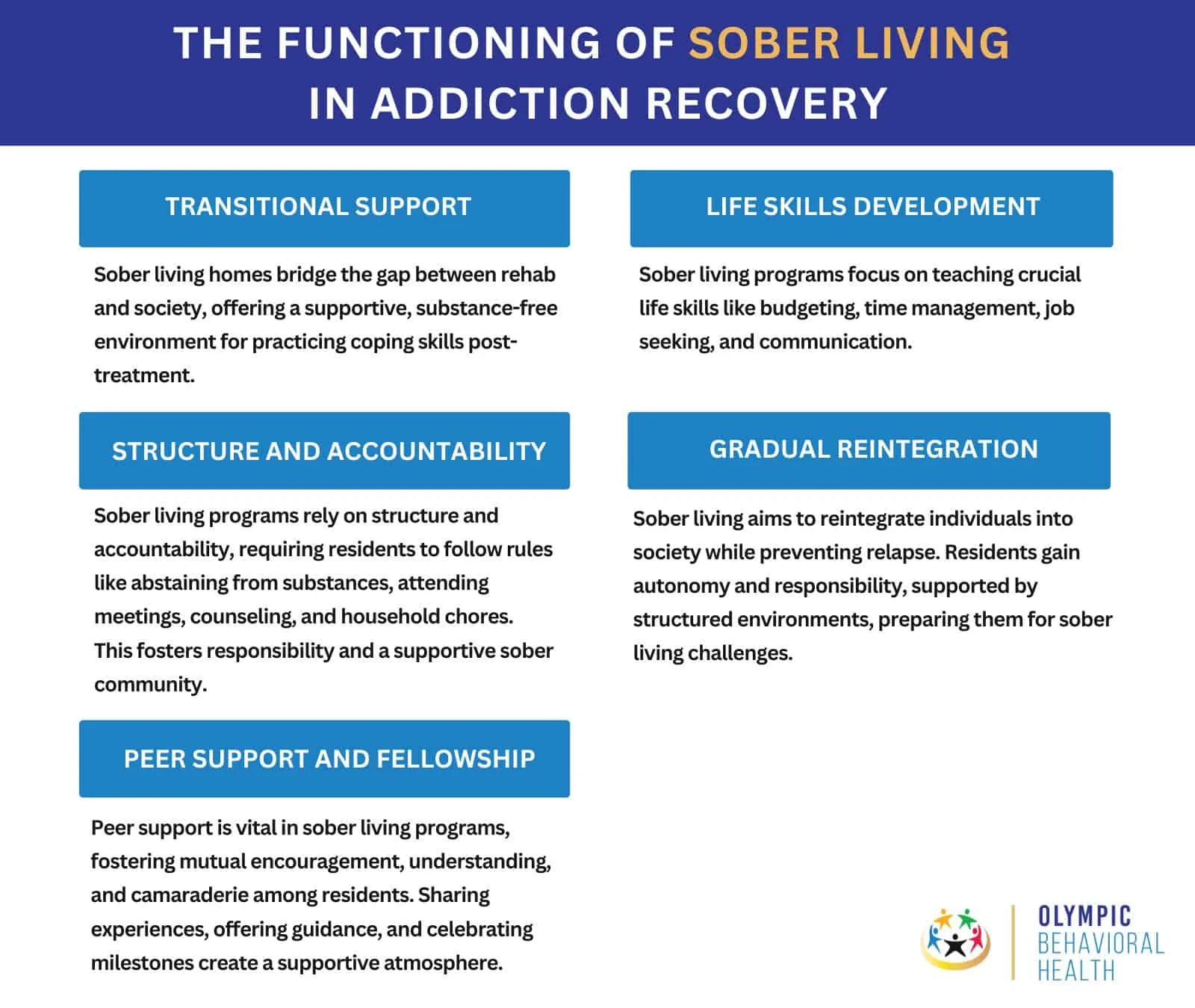
Sober living homes act as transitional residences for individuals who have completed primary addiction treatment. These homes serve as a bridge between the controlled environment of rehabilitation facilities and the challenges of returning to mainstream society. By providing a supportive and substance-free living environment, sober living homes offer residents the opportunity to practice the coping skills and strategies learned during treatment in real-world settings.
2. Structure and Accountability
Central to the effectiveness of sober living programs is the establishment of structure and accountability. Residents must adhere to a set of rules and guidelines, which include abstaining from drugs and alcohol, attending regular house meetings, participating in counseling sessions, and contributing to the upkeep of the household. This structured environment helps individuals develop a sense of responsibility and accountability for their actions while fostering a supportive community of peers committed to sobriety.
Contact us today to schedule an initial assessment or to learn more about our services. Whether you are seeking intensive outpatient care or simply need guidance on your mental health journey, we are here to help.
3. Peer Support and Fellowship
Peer support plays a crucial role in the success of sober living programs. Residents live alongside others in recovery, providing mutual encouragement, understanding, and camaraderie. This sense of fellowship creates a supportive atmosphere where individuals share their experiences, offer guidance, and celebrate milestones in their recovery journey.
4. Life Skills Development
Sober living programs emphasize developing essential life skills instrumental in maintaining long-term sobriety. Residents are given opportunities to learn and practice budgeting, time management, job seeking, and interpersonal communication skills. These practical skills empower individuals to lead independent and fulfilling lives and serve as protective factors against relapse by promoting stability and self-sufficiency.
5. Gradual Reintegration
The ultimate goal of sober living is to facilitate the gradual reintegration of individuals into mainstream society while minimizing the risk of relapse. As residents progress through the program, they gain independence and autonomy, gradually assuming greater responsibility for their actions and decisions. By providing a supportive and structured environment, sober living programs equip individuals with the tools and resources to navigate the challenges of sober living with confidence and resilience.
Rediscover Life at Olympic Behavioral Health
Get the compassionate support you deserve. We're here to help you reclaim joy, wellness, and a brighter future.
Our Facility
What are the Factors to Consider When Choosing a Sober Living Home?
There are a variety of factors that need to be considered when chasing a sober living home because they significantly impact recovery outcomes. A study by Amy A. Mericle A.A. et al. 2018, “Sober living house characteristics: A multilevel analyses of factors associated with improved outcomes.” found that homes affiliated with larger organizations, with a strong 12-step program orientation and lower resident capacities, are associated with improved recovery outcomes. Additionally, houses that charge higher fees and require at least 30 days of abstinence before admission tend to report better success rates. Following are the 6 main factors that contribute to creating a structured, supportive environment that facilitates long-term sobriety:
1. Location and Environment
Consider the location and environment of the sober living home. Is it in a safe, peaceful neighborhood, away from triggers and temptations? Study by Polcin, D. L., Henderson, D., Trocki, K., Evans, K., & Wittman, F., 2012, “Community context of sober living houses” highlights the significance of community context in the effectiveness of sober living houses (SLHs). The study compared various community settings and found that SLHs located in supportive and resource-rich communities showed better outcomes. Residents in these communities had higher employment rates and longer sobriety durations. Conversely, SLHs in areas with high crime rates and limited resources faced more challenges, and residents had lower success rates in maintaining sobriety.
2. Structure and Program Offerings
Evaluate the structure and program offerings of the sober living home. Does it provide a structured daily routine, including house meetings, counseling sessions, and recreational activities? Look for facilities that offer comprehensive programs tailored to meet the unique needs of individuals in recovery, focusing on promoting personal growth, accountability, and life skills development.
Are you covered for treatment?

Olympic Behavioral Health is an approved provider for Blue Shield and Tufts while also accepting many other major insurance carriers.
Check Coverage Now!3. Staff Qualifications and Support
Assess the qualifications and experience of the staff members at the sober living home. Are they trained professionals with expertise in addiction recovery and mental health? The presence of qualified staff, including counselors, house managers, and support personnel, is essential for providing residents with the guidance, encouragement, and support they need throughout their recovery journey.
4. Rules and Regulations
Review the rules and regulations of the sober living home. Are there clear guidelines regarding substance use, curfews, guest policies, and house responsibilities? A well-defined set of rules helps create a structured and accountable environment conducive to sobriety. Additionally, inquire about the consequences of violating house rules and how disciplinary issues are addressed.
5. Peer Community and Support Network
Consider the peer community and support network available at the sober living home. Are residents encouraged to build meaningful relationships and support each other in their recovery? A strong sense of camaraderie and fellowship among residents fosters a supportive and nurturing environment where individuals share their experiences, offer encouragement, and hold each other accountable.
Did you know most health insurance plans cover substance use disorder treatment? Check your coverage online now.
6. Cost and Affordability
When considering the cost and affordability of a sober living home, it’s important to look at various factors such as location, services offered, and additional fees. On average, sober living homes can range from $300 to $2,000 per month (Drug Rehab), with some homes charging as much as $5,600 per month (Transitions Gateway), depending on the location and amenities provided. Additional costs might include administrative fees, security deposits, and the first and last month’s rent, which can significantly increase initial expenses.
What to Expect in Sober Living?
Entering a sober living environment marks a significant step in the journey of addiction recovery. It’s essential to clearly understand what to expect in sober living to ensure a smooth transition and maximize the benefits of this recovery phase. According to Pettersen G. et al. 2023, “From existing to living: Exploring the meaning of recovery and a sober life after a long duration of a substance use disorder,” rehabilitation from SUDs should take a broader focus, offering a supportive community environment and focusing on life skill development.

1. Supportive Community
In sober living, residents become part of a supportive community of individuals who are also navigating the challenges of addiction recovery. Expect to interact with housemates with similar experiences and goals, providing mutual encouragement, understanding, and camaraderie.
Contact us today to schedule an initial assessment or to learn more about our services. Whether you are seeking intensive outpatient care or simply need guidance on your mental health journey, we are here to help.
2. Structured Environment
Sober living homes offer a structured environment designed to promote stability and accountability. Residents adhere to house rules, participate in regular house meetings, and engage in daily activities that foster personal responsibility and routine.
3. Continued Treatment and Therapy
While in sober living, individuals continue their journey of recovery through ongoing treatment and therapy. Expect to attend counseling sessions, group meetings, and other therapeutic activities to address underlying issues, develop coping strategies, and promote emotional well-being.
4. Life Skills Development
Sober living provides an opportunity to focus on developing essential life skills for independent living and long-term sobriety. Expect to learn practical skills such as budgeting, time management, meal planning, and household chores, fostering self-sufficiency and confidence.
Rediscover Life at Olympic Behavioral Health
Get the compassionate support you deserve. We're here to help you reclaim joy, wellness, and a brighter future.
Our Facility 5. Accountability and Progress Monitoring
Accountability is a fundamental aspect of sober living. Residents are accountable to themselves, their peers, and staff members, who monitor progress, provide feedback and offer support. To maintain a sober and responsible lifestyle, expect to undergo regular drug testing and adhere to house rules.
6. Gradual Reintegration
Sober living serves as a bridge between structured treatment environments and independent living in mainstream society. Expect to gradually reintegrate, gaining the skills, confidence, and support necessary to transition back into everyday life while maintaining sobriety.
What is a Halfway House?
A halfway house is a residential environment designed to support individuals in their transition from structured treatment settings, such as rehab or detox centers, back to independent living in mainstream society. Halfway houses provide a supportive and structured environment where residents continue their recovery while gradually reintegrating into society.
Are you covered for treatment?
Olympic Behavioral Health is an approved provider for Blue Shield and Tufts while also accepting many other major insurance carriers.
Check Coverage Now!What are the Differences Between Halfway Houses and Other Sober-Living Houses?
| Aspect | Halfway Houses | Other Sober-Living Houses |
| Purpose | The transition from structured treatment to independent living | A supportive environment for maintaining sobriety |
| Residency | Typically, short-term, transitional | Varied, can be short-term or long-term |
| Structure | Often more structured and supervised | Less structured, more independent |
| Rules and Regulations | Strict adherence to rules and curfews | Guidelines are less rigid |
| Focus | Reintegration into society | Maintenance of sobriety and community |
| Programs and Support Services | It offers specific programs and services to aid the transition | Focus on peer support and mutual aid |
| Length of Stay | Generally shorter duration | It varies, often longer-term if needed |
| Transition Support | Focus on developing life skills and accessing community resources | Emphasis on peer support and relapse prevention |
| Supervision | Often staffed with trained professionals | Peer-led with minimal professional oversight |
| Funding and Accessibility | It is funded by government or non-profit organizations | They have private financing or are run as for-profit businesses |
| Eligibility Criteria | Typically requires completion of a treatment program | Often requires commitment to maintaining sobriety and adherence to house rules |
How Long Can You Stay in a Sober Living House?
The length of stay in a sober living house varies based on individual needs and progress in recovery. It serves as a transitional phase between intensive treatment and independent living. Residents typically stay for a few weeks to several months, with the duration tailored to their recovery goals. According to Subbaraman, M. S., Mahoney, E., Mericle, A., & Polcin, D. et al. 2023, “Six-month length of stay associated with better recovery outcomes among residents of sober living houses,” staying in a sober living house for at least six months was related to better outcomes than leaving before six months.
Factors such as employment status, family support, and progress in sobriety influence the decision. The goal is gradually transitioning to mainstream society while maintaining sobriety and building essential life skills.
What are the Benefits of Sober Living Homes?
Sober living homes offer numerous benefits for individuals in recovery, facilitating a supportive and structured environment conducive to sustained sobriety. They serve as invaluable resources in the journey toward sustained recovery, offering a supportive and structured environment conducive to personal growth and well-being. Douglas L. Polcin D. L. et al., 2022, “Outcomes Among Sober Living House Residents Who Relapse: Role of Recovery Capital,” carried out a study of 197 residents who relapsed within six months of entering sober living houses (SLHs), significant improvements were observed despite relapse. Participants showed a notable increase in percent days abstinent from alcohol and drugs, along with improvements in psychiatric symptoms, severity of employment problems, and stable housing.

Did you know most health insurance plans cover substance use disorder treatment? Check your coverage online now.
Supportive Community and Accountability
- Residents benefit from a supportive network of peers also committed to recovery.
- Accountability measures, including regular house meetings and adherence to rules, foster responsibility and growth.
Life Skill Development
- Residents learn essential life skills such as budgeting, time management, and personal hygiene.
- Structured routines aid in the reestablishment of healthy habits and responsibilities.
Reduced Risk of Relapse
- Sober living environments provide a substance-free space away from triggers and temptations.
- Residents are subject to drug screenings and strict rules, mitigating the risk of relapse.
Contact us today to schedule an initial assessment or to learn more about our services. Whether you are seeking intensive outpatient care or simply need guidance on your mental health journey, we are here to help.
Gradual Transition to Independence
- Residents experience a gradual transition from intensive treatment to independent living.
- The supportive yet independent environment prepares individuals for mainstream society while maintaining sobriety.
Meaningful Relationships and Support
- Residents connect with peers who understand their struggles and provide mutual support.
- The communal atmosphere fosters camaraderie and a sense of belonging, crucial for long-term recovery.
Improved Overall Well-being
- Sobriety leads to improved physical, mental, and emotional health.
- Residents experience better sleep, enhanced decision-making abilities, and a greater sense of purpose and accomplishment.
Rediscover Life at Olympic Behavioral Health
Get the compassionate support you deserve. We're here to help you reclaim joy, wellness, and a brighter future.
Our Facility Can I bring my pet to a sober living house?
Pet policies vary by facility. Some sober living homes may allow pets with specific restrictions, such as size, breed, or behavior requirements. Other facilities may not permit pets to maintain a clean and allergy-free environment. Before making any decisions, it’s important to check with the specific sober living home regarding their pet policy.
Are there age restrictions for residents in sober living homes?
Age requirements for sober living homes can vary. Most facilities accept adult residents, typically those over 18. Some homes might have specific age restrictions or cater to particular age groups, such as young adults, seniors, or specific life stages. It’s crucial to verify the age policy of the sober living home you’re considering to ensure it aligns with your needs.
Is transportation provided to residents in sober living homes?
Transportation services differ between facilities. Some sober living homes offer transportation assistance for specific purposes, such as medical appointments, job interviews, or recovery meetings. Other facilities may require residents to arrange their transportation. Checking with the sober living home about available transportation services can help you plan accordingly.
Are you covered for treatment?
Olympic Behavioral Health is an approved provider for Blue Shield and Tufts while also accepting many other major insurance carriers.
Check Coverage Now!Are there opportunities for recreational activities in sober living homes?
Many sober living homes organize recreational activities to promote socialization and healthy leisure time. These activities can include group outings, fitness classes, hobby workshops, and community events. These activities can help residents build supportive relationships and maintain a balanced lifestyle during recovery.
Can I have visitors or guests in a sober living home?
Policies regarding visitors and guests vary by sober living home. Some facilities may restrict visitors to maintain a safe and focused environment, while others may allow limited visitation hours or overnight guests under certain conditions. Understanding the visitor policy of the sober living home is important to ensure it meets your expectations and needs.
What are the success rates of sober living homes?
Sober living homes have shown high success rates in supporting long-term recovery. According to a study on sober living house success rates by The ECHO Foundation, 68% of residents remain abstinent after a year, highlighting the effectiveness of structured support and peer accountability. These environments offer a crucial bridge between rehab and independent living, fostering personal growth and sobriety. More information can be found about hypnotherapy for addiction.
Incorporating additional treatments, such as hypnotherapy for addiction, can further enhance recovery outcomes by addressing deep-seated issues. Additionally, structured programs like a relapse prevention program provide residents with tools to handle triggers and prevent relapse, contributing to higher success rates.
Share This Post

Adam Siegel
View profile
Lisa Alleva
View profile
Treatments we offer:
Are you covered for treatment?








Olympic Behavioral Health is an approved provider for Blue Shield and Tufts, while also accepting many other major insurance carriers.
Check Coverage Now!