What Is Quiet BPD? Signs and Symptoms
Quiet BPD describes a presentation of borderline personality disorder where emotional pain turns inward instead of outward. The distress is just as intense, but it stays hidden from the people closest to you.
People with quiet BPD rarely rage or slam doors. They withdraw, apologize, blame themselves, and keep functioning at work while quietly falling apart.
That invisibility is exactly why quiet BPD goes unrecognized for years. Many people receive care for depression or anxiety long before anyone names the underlying pattern.
Understanding what quiet BPD actually looks like is the first step toward getting the right treatment.
Key Takeaways
- Quiet BPD is not a separate diagnosis in the DSM-5-TR. The term describes an internalizing presentation of borderline personality disorder, where symptoms target the self rather than other people.
- A 2025 systematic review in General Hospital Psychiatry pooled 35 studies covering 34,832 patients with borderline personality disorder and found lifetime suicidal ideation in 80 percent and suicide attempts in 52 percent.
- That same meta-analysis identified a significantly higher lifetime rate of completed suicide among outpatients than inpatients, which makes accurate identification in outpatient settings a clinical priority rather than an academic one.
- The National Institute of Mental Health reports past-year borderline personality disorder prevalence at 1.4 percent of United States adults, while clinic-based samples run substantially higher because internalizing presentations escape detection.
- Dialectical behavior therapy targets the self-invalidation that defines quiet BPD through its distress tolerance and emotion regulation modules, making it the strongest evidence-based option for this presentation.
Did you know most health insurance plans cover substance use disorder treatment? Check your coverage online now.
What Is Quiet BPD?
Quiet BPD is an internalizing pattern of borderline personality disorder in which emotional dysregulation, fear of abandonment, and unstable self-image drive self-directed behaviors rather than visible outbursts.
How Quiet BPD Differs from the Classic Presentation
Quiet BPD redirects the same nine DSM-5-TR borderline personality disorder criteria inward, which suppresses the external signs that prompt referral.
- Anger turns against the self: Classic borderline presentations discharge anger outward through confrontation, while quiet BPD converts that same anger into self-criticism, self-blame, and self-punishment.
- Abandonment fear produces withdrawal: Fear of abandonment drives frantic contact-seeking in classic presentations, but in quiet BPD it triggers preemptive withdrawal so rejection cannot happen first.
- Splitting happens silently: Splitting still flips a person between idealization and devaluation, but people with quiet BPD conceal the devaluation and continue performing warmth outwardly.
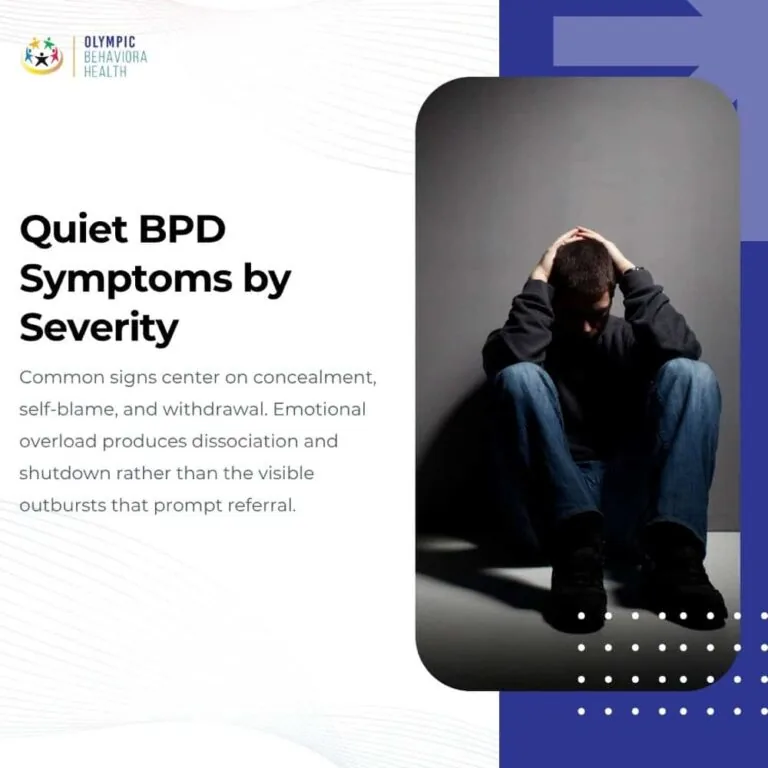
- Dissociation replaces impulsivity: Emotional overload produces dissociation, numbness, and shutdown rather than the impulsive risk-taking that makes classic borderline presentations visible.
- Apparent competence masks severity: Sustained work performance and social composure generate what clinicians call apparent competence, which leads assessors to underestimate genuine symptom severity.
The Four Subtypes of Borderline Personality Disorder
Theodore Millon described four borderline personality disorder subtypes, and quiet BPD corresponds most directly to the discouraged subtype.
- Discouraged borderline: This subtype produces clinging dependency, self-effacement, and inward-directed hopelessness, and it maps onto what popular usage now calls quiet BPD.
- Impulsive borderline: This subtype generates sensation-seeking, flirtatiousness, and reckless behavior when abandonment threat rises.
- Petulant borderline: This subtype produces unpredictable irritability, defiance, and resentment directed at caregivers and partners.
- Self-destructive borderline: This subtype channels distress into self-punishing behavior and somatic complaints, and it overlaps substantially with the discouraged presentation.
Contact us today to schedule an initial assessment or to learn more about our services. Whether you are seeking intensive outpatient care or simply need guidance on your mental health journey, we are here to help.
Why Quiet BPD Is Not a DSM-5-TR Diagnosis
Quiet BPD carries no independent diagnostic code, which changes how clinicians document and bill for the condition.
- The DSM-5-TR recognizes one borderline diagnosis: The American Psychiatric Association lists a single set of nine borderline personality disorder criteria and requires five to be met, with no subtype specifiers attached.
- Clinical language borrowed the term from patients: Quiet BPD entered clinical vocabulary through patient and therapist communities describing an internalizing phenotype the manual does not separate out.
- Documentation still uses the formal label: A clinician evaluating quiet BPD records borderline personality disorder, then describes the internalizing features in the narrative assessment.
- Related patterns have their own entries: Persistent difficulty with closeness and dependency can also reflect adult attachment disorder, which follows a different developmental course and requires separate assessment.
What Causes Quiet BPD?
Quiet BPD develops when inherited emotional sensitivity interacts with an environment that punishes emotional expression, pushing distress inward rather than outward.
Neurobiological Causes of Emotional Dysregulation
Borderline personality disorder involves measurable differences in the brain circuits that generate and restrain emotion.
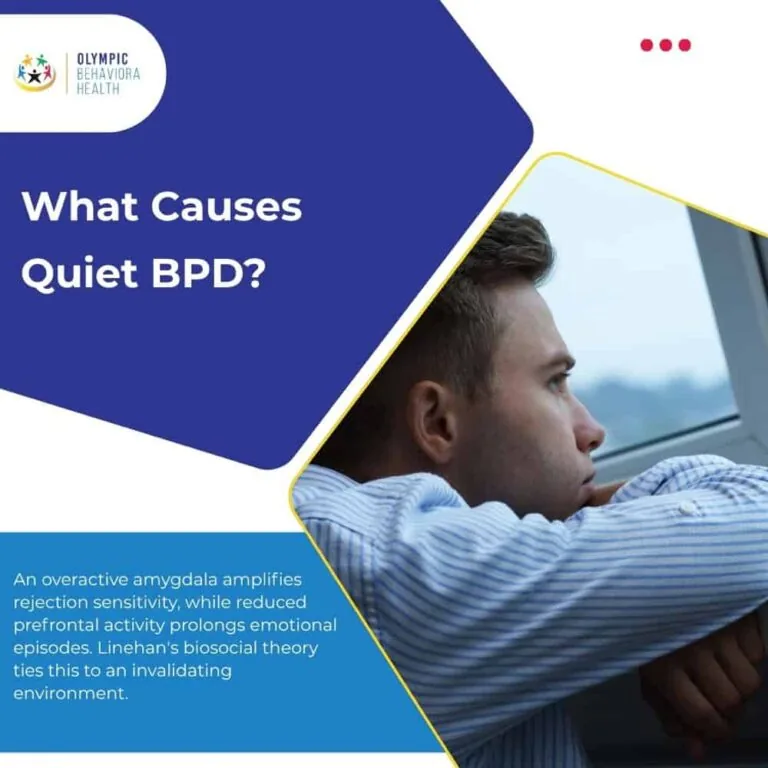
- Amygdala hyperreactivity amplifies threat detection: An overactive amygdala escalates emotional responses to neutral facial expressions and mild social cues, producing rejection sensitivity out of proportion to the trigger.
- Prefrontal hypoactivity weakens the brake: Reduced activity in the dorsolateral prefrontal cortex and anterior cingulate cortex limits top-down regulation, which prolongs emotional episodes instead of resolving them.
- Serotonergic dysfunction lowers impulse control: Disrupted serotonin transmission reduces behavioral inhibition and elevates risk of self-directed aggression.
- HPA axis dysregulation sustains stress load: A dysregulated hypothalamic-pituitary-adrenal axis keeps cortisol response patterns abnormal, which maintains baseline physiological arousal between stressors.
- Oxytocin signaling shapes trust: Altered oxytocin signaling dampens the reward value of social reassurance, so comfort from other people fails to reduce distress the way it typically would.
Rediscover Life at Olympic Behavioral Health
Get the compassionate support you deserve. We're here to help you reclaim joy, wellness, and a brighter future.
Our Facility
Genetic and Hereditary Factors
Borderline personality disorder aggregates in families, which establishes an inherited component to emotional sensitivity.
- Twin research supports substantial heritability: Twin and family studies place borderline personality disorder among the more heritable personality disorders, with genetic factors accounting for a meaningful share of variance in trait emotional instability.
- Inherited traits precede the disorder: Heritable temperament traits such as affective instability and impulsivity appear before any diagnosable disorder emerges, which positions them as risk factors rather than symptoms.
- Family history raises risk across diagnoses: First-degree relatives of people with borderline personality disorder show elevated rates of mood disorders and substance use disorders alongside personality pathology.
Developmental and Environmental Causes
Early environment determines whether inherited emotional sensitivity develops into an outward or an inward presentation.
- Linehan’s biosocial theory explains the mechanism: Marsha Linehan developed dialectical behavior therapy at the University of Washington. Her biosocial theory frames borderline personality disorder as a transaction between biological emotional vulnerability and an invalidating environment that teaches a child their internal experience is wrong.
- Invalidation specifically produces the quiet presentation: An environment that punishes visible distress trains the child to suppress expression, which converts outward protest into self-invalidation and concealment.
- Adverse childhood experiences raise risk: Adverse childhood experiences including emotional neglect, childhood trauma, and caregiver unpredictability appear at elevated rates in borderline personality disorder histories.
- Attachment disruption shapes relational patterns: Inconsistent caregiver responsiveness produces anxious and disorganized attachment patterns that later drive the withdraw-and-test cycle seen in quiet BPD.
Co-Occurring Conditions That Reinforce the Internalizing Pattern
Conditions that co-occur with quiet BPD each deepen the inward direction of symptoms through a specific mechanism.
- Major depressive disorder compounds self-blame: Depression intensifies the negative self-concept already present in borderline personality disorder, which strengthens self-directed hostility rather than outward anger.
- Social anxiety disorder reinforces avoidance: Anticipated negative evaluation adds a second reason to withdraw, so avoidance becomes doubly reinforced and harder to interrupt.
- Post-traumatic stress disorder drives dissociation: Trauma-related hyperarousal pushes the nervous system toward dissociative shutdown, which presents as the emotional numbness characteristic of quiet BPD.
- Eating disorder history channels control: Restriction and other eating behaviors offer a private, controllable outlet for distress, which fits the concealment pattern of the quiet presentation.
Are you covered for treatment?

Olympic Behavioral Health is an approved provider for Blue Shield and Tufts while also accepting many other major insurance carriers.
Check Coverage Now!Substance Use Pathways in Quiet BPD
Substance use disorders co-occur frequently with borderline personality disorder through two distinct pathways.
- Self-medication addresses unbearable affect: Alcohol and sedatives blunt the intensity of emotional episodes, which reinforces use as an emotion regulation strategy and accelerates dependence.
- Shared neurobiological vulnerability underlies both: Impaired impulse control and reward dysregulation predispose a person to both borderline personality disorder and substance use disorder independently.
- Concealment delays identification: Because quiet BPD hides distress, substance use often surfaces before the personality pathology does, which is why integrated dual diagnosis assessment matters at intake.
How Quiet BPD Develops Across the Lifespan
Quiet BPD follows a documented developmental course, with symptoms emerging in adolescence, peaking in early adulthood, and declining with age.
Age of Onset and Early Warning Signs
Borderline personality disorder symptoms follow age-linked stages that clinicians use to time intervention.
- Ages 12 to 17: Emotional sensitivity, intense friendship ruptures, and identity uncertainty appear during adolescence, though the internalizing presentation reads as shyness or moodiness to observers.
- Ages 18 to 25: Symptom severity peaks in early adulthood as independence removes external structure, and this window produces the highest rate of first clinical contact.
- Ages 26 to 39: Impulsive features decline measurably during this period while chronic emptiness, relational difficulty, and self-criticism persist, which is why quiet BPD is frequently first identified in the thirties.
- Ages 40 and older: Acute behavioral symptoms continue to decrease with age, though untreated interpersonal and occupational impairment accumulates across decades.
Did you know most health insurance plans cover substance use disorder treatment? Check your coverage online now.
What Longitudinal Research Shows About Recovery
Long-term follow-up studies establish borderline personality disorder as a treatable condition rather than a permanent trait.
- The McLean Study of Adult Development tracked outcomes for 16 years: Mary Zanarini and colleagues at McLean Hospital followed patients with borderline personality disorder across 16 years. Their prospective data established sustained symptomatic remission as the typical long-term outcome rather than the exception.
- Symptomatic remission precedes functional recovery: Symptom reduction consistently arrives earlier than gains in work and relationship functioning, which means treatment planning must extend past symptom control.
- Recurrence remains common after remission: A meaningful share of people who reach remission experience symptom return, which supports step-down care rather than abrupt discharge.
Quiet BPD Symptoms by Severity
Quiet BPD symptoms range from concealed daily distress to acute self-directed crisis, and the severity tiers below determine the level of care required.
Common Signs of Quiet BPD
Common quiet BPD signs center on concealment, self-blame, and withdrawal rather than visible conflict.
- Chronic emptiness persists between episodes: A stable sense of feeling empty continues even during periods without acute stress, and people describe it as going through the motions.
- Self-blame replaces external anger: Interpersonal conflict produces immediate assumption of fault, which prompts over-apologizing and preemptive self-criticism.
- People-pleasing suppresses needs: Persistent people-pleasing and masking eliminate the expression of preferences, which erodes identity stability over time.
- Withdrawal follows perceived rejection: Minor signs of distance from another person trigger silent withdrawal, ghosting, and self-isolation rather than a request for reassurance.
- Emotional numbness alternates with intensity: Episodes of emotional numbness follow periods of overwhelming feeling, and observers register only the flat presentation.
- High-functioning performance continues: Work performance and social presentation remain intact during severe internal distress, which delays recognition by family and clinicians alike.
Contact us today to schedule an initial assessment or to learn more about our services. Whether you are seeking intensive outpatient care or simply need guidance on your mental health journey, we are here to help.
Severe Symptoms and Crisis Warning Signs
Severe quiet BPD symptoms carry genuine medical risk despite the absence of outward warning signs.
- Self-directed harm occurs privately: Self-injury in quiet BPD is concealed rather than disclosed, which removes the visible cue that ordinarily prompts intervention.
- Suicidal ideation reaches high lifetime rates: The 2025 General Hospital Psychiatry meta-analysis found lifetime suicidal ideation in 80 percent of patients with borderline personality disorder, with suicide attempts in 52 percent.
- Dissociative episodes interrupt awareness: Depersonalization and derealization detach a person from their surroundings and body, and these episodes escalate during unresolved interpersonal stress.
- Transient paranoid ideation emerges under stress: Brief stress-related paranoid thinking and severe dissociative symptoms constitute a recognized DSM-5-TR borderline criterion.
- Co-occurring depression deepens risk: Untreated major depressive disorder compounds hopelessness and raises acute risk above the level either condition produces alone.
Seek emergency care immediately if any of the following are present:
- Active thoughts of ending your life, with or without a specific plan.
- Escalating self-injury, or self-injury that causes wounds requiring medical attention.
- Dissociative episodes involving lost time or loss of awareness of your surroundings.
- Paranoid thinking or perceptual disturbance that does not resolve when the stressor ends.
The 988 Suicide and Crisis Lifeline is available 24 hours a day by calling or texting 988.
Long-Term Effects of Untreated Quiet BPD
Untreated quiet BPD produces cumulative damage across relationships, employment, and physical health.
- Relationship patterns repeat across decades: Repeated withdrawal cycles end relationships before rupture can be repaired, which confirms the abandonment expectation that started the cycle.
- Occupational trajectory flattens: Sustained emotional labor and burnout limit career progression even when performance metrics stay acceptable.
- Diagnostic delay compounds harm: Years of treatment aimed at depression or anxiety alone leave the underlying emotional dysregulation unaddressed, which produces repeated treatment non-response.
- Physical health consequences accumulate: Chronic HPA axis activation contributes to sleep disruption, cardiovascular strain, and chronic pain conditions over time.
Quiet BPD vs Classic BPD vs Complex PTSD
Quiet BPD, classic borderline personality disorder, and complex PTSD share emotional dysregulation and negative self-concept, but they differ across onset, trigger, and treatment target.
Rediscover Life at Olympic Behavioral Health
Get the compassionate support you deserve. We're here to help you reclaim joy, wellness, and a brighter future.
Our Facility Comparing the Three Presentations
The table below separates quiet BPD from the two conditions most often confused with it.
| Feature | Quiet BPD | Classic BPD | Complex PTSD |
|---|---|---|---|
| Diagnostic status | Informal term for an internalizing presentation of borderline personality disorder | DSM-5-TR borderline personality disorder | ICD-11 diagnosis, not a separate DSM-5-TR diagnosis |
| Direction of distress | Inward, toward the self | Outward, toward others | Inward, with trauma-linked avoidance |
| Core fear | Abandonment, managed by preemptive withdrawal | Abandonment, managed by protest and pursuit | Threat recurrence, managed by avoidance |
| Self-image | Unstable and shifting | Unstable and shifting | Persistently negative and stable |
| Relationship pattern | Silent devaluation and disappearance | Visible idealization and devaluation cycles | Avoidance of closeness altogether |
| Required cause | No trauma requirement | No trauma requirement | Prolonged or repeated trauma required |
| Primary treatment target | Emotion regulation and self-invalidation | Impulse control and interpersonal effectiveness | Trauma processing and safety |
Where the Distinction Changes Treatment
Separating quiet BPD from complex PTSD determines which treatment sequence a clinician selects first.
- Stable versus shifting self-concept guides assessment: Complex PTSD produces a consistently negative self-view, while borderline personality disorder produces a self-view that shifts across days and relationships.
- Trauma history is required for one and not the other: A complex PTSD diagnosis requires prolonged or repeated trauma exposure, whereas borderline personality disorder can develop from invalidation without discrete traumatic events.
- Sequencing differs by primary diagnosis: Confirmed post-traumatic stress disorder shifts the treatment order toward stabilization and trauma processing, while primary borderline pathology places skills training first.
- Both conditions co-occur frequently: A substantial share of people meet criteria for both, and integrated treatment addresses emotion regulation and trauma processing in the same plan rather than sequentially.
How Quiet BPD Is Diagnosed
Diagnosing quiet BPD requires structured screening plus clinical interview, because the presentation withholds the behavioral signals that ordinarily trigger assessment.
Are you covered for treatment?
Olympic Behavioral Health is an approved provider for Blue Shield and Tufts while also accepting many other major insurance carriers.
Check Coverage Now!The McLean Screening Instrument for BPD
The McLean Screening Instrument for Borderline Personality Disorder (MSI-BPD) is the brief screening tool most often used to flag borderline pathology before full assessment.
- Format and scoring: The MSI-BPD is a 10-item self-report questionnaire derived from the borderline module of the Diagnostic Interview for DSM Personality Disorders, and a score of 7 or higher indicates further evaluation is warranted.
- Validation performance: Zanarini and colleagues reported sensitivity of .81 and specificity of .85 for the 7-item cutoff in their 2003 validation study in the Journal of Personality Disorders.
- Screening is not diagnosis: A positive MSI-BPD result identifies who needs a full diagnostic interview, and no self-report score establishes a personality disorder diagnosis on its own.
- Severity tracking uses a different tool: The Zanarini Rating Scale for Borderline Personality Disorder (ZAN-BPD) measures symptom change over time across the nine DSM criteria, which makes it the standard instrument for monitoring treatment response.
Why Quiet BPD Is Frequently Misdiagnosed
Quiet BPD receives incorrect or incomplete diagnoses at high rates because its defining feature is concealment.
- Depression captures the presenting complaint: Low mood, emptiness, and loss of interest match depressive criteria closely, so treatment targets the mood episode and leaves emotional dysregulation untouched.
- Anxiety diagnoses absorb the avoidance: Withdrawal and rejection sensitivity read as social anxiety disorder, which redirects treatment toward exposure rather than emotion regulation skills.
- Apparent competence lowers assessed severity: Intact work and social functioning lead assessors to rate impairment as mild, which routes people toward lower intensity care than their symptoms warrant.
- Treatment non-response is the diagnostic clue: Repeated failure to respond to antidepressant treatment and standard therapy signals that unrecognized co-occurring conditions are driving the presentation.
Treatment for Quiet BPD
Quiet BPD responds to structured psychotherapy that builds emotion regulation skills, with medication addressing co-occurring symptoms rather than the personality pathology itself.
Did you know most health insurance plans cover substance use disorder treatment? Check your coverage online now.
First-Line Psychotherapies
Four named psychotherapies hold the strongest evidence base for borderline personality disorder, and each targets a different mechanism.
- Dialectical behavior therapy builds regulation skills: Dialectical behavior therapy teaches distress tolerance, emotion regulation, mindfulness, and interpersonal effectiveness, and its emphasis on validation directly counteracts the self-invalidation central to quiet BPD.
- Mentalization-based treatment restores reflective capacity: Anthony Bateman and Peter Fonagy developed mentalization-based treatment to rebuild the ability to interpret one’s own and others’ mental states accurately, which reduces the misreading that drives withdrawal.
- Schema therapy addresses core beliefs: Schema therapy targets the early maladaptive schemas of defectiveness and abandonment that sustain self-blame across decades.
- Transference-focused psychotherapy integrates self-image: Transference-focused psychotherapy uses the therapeutic relationship to consolidate a fragmented self-image into a stable one.
Medications Used Alongside Therapy
No medication holds FDA approval for borderline personality disorder, so prescribing targets specific co-occurring symptoms.
- Mood stabilizers reduce affective instability: Lamotrigine and topiramate are prescribed off-label to dampen mood lability and impulsive aggression.
- Second-generation antipsychotics address perceptual symptoms: Quetiapine, aripiprazole, and olanzapine are used at low doses to reduce transient paranoid ideation and dissociative intensity.
- SSRIs treat co-occurring depression and anxiety: Sertraline, fluoxetine, and escitalopram treat co-occurring major depressive disorder and anxiety disorders rather than the borderline diagnosis itself.
- Medication review reduces polypharmacy: Accumulated prescriptions from years of misdiagnosis warrant systematic review, because reducing unnecessary agents improves both adherence and side effect burden.
Second-Line and Adjunct Approaches
Adjunct treatments extend gains when first-line psychotherapy alone leaves functional impairment in place.
- Group skills training reinforces practice: Group formats provide repeated in-vivo practice of interpersonal effectiveness skills that individual sessions cannot replicate.
- Family and systems work interrupts invalidation: Family intervention reduces the invalidating responses that maintain symptom cycles at home.
- Trauma-focused modalities address underlying events: Eye movement desensitization and reprocessing and cognitive processing therapy target trauma memories once emotion regulation skills are stable enough to tolerate processing.
- Nutritional and sleep intervention stabilizes baseline: Correcting sleep disruption and nutritional deficits lowers physiological arousal, which raises the threshold at which emotional episodes trigger.
Contact us today to schedule an initial assessment or to learn more about our services. Whether you are seeking intensive outpatient care or simply need guidance on your mental health journey, we are here to help.
Emerging and Investigational Treatments
Several treatments for borderline personality disorder remain investigational, and each occupies a different point in the evidence pipeline.
- Ketamine and esketamine target acute suicidality: Intravenous ketamine is used off-label and esketamine holds FDA approval for treatment-resistant depression with suicidal ideation, though neither is approved for borderline personality disorder itself.
- Neurofeedback trains regulation directly: Neurofeedback trains voluntary modulation of cortical activity patterns and is under active study as an adjunct for emotional dysregulation and trauma symptoms.
- Transcranial magnetic stimulation is in trials: Repetitive transcranial magnetic stimulation targeting prefrontal regions is under investigation for impulsivity and affective instability in borderline personality disorder.
- Intranasal oxytocin remains experimental: Intranasal oxytocin has produced mixed trial results for trust and social threat processing, and it holds no approved clinical indication.
Treatment for Quiet BPD at Olympic Behavioral Health
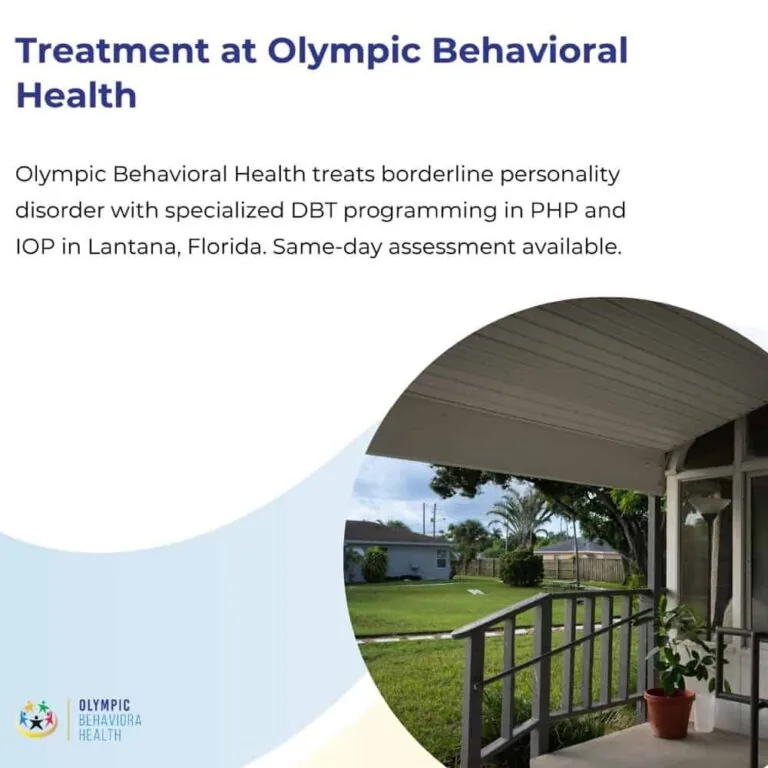
Olympic Behavioral Health treats borderline personality disorder through a true outpatient continuum in Lantana, Florida, with specialized dialectical behavior therapy programming at every level of care.
Partial Hospitalization Program
The partial hospitalization program delivers the highest intensity of outpatient structure for people whose quiet BPD symptoms require daily clinical contact.
- Schedule and duration: Programming runs 9 AM to 12 PM and 12:30 PM to 3:30 PM seven days a week. Saturday and Sunday groups run 10 AM to 1 PM, and average length of stay is 30 to 45 days.
- DBT skills training is a standing group: Dialectical behavior therapy skills training runs as a dedicated mental health group, alongside mindfulness training and a group on personality and attachment styles.
- Trauma assessment happens at intake: Every incoming client receives a trauma assessment, and those meeting post-traumatic stress disorder criteria enter a specialized trauma track using EMDR and Rapid Trauma Resolution.
- Groups are tracked by presentation: Groups separate by mental health, substance use, and dual diagnosis tracks, which keeps skills content matched to the primary clinical problem.
- The outpatient model preserves autonomy: Clients retain phone access and personal freedoms rather than residential-style restrictions, which matters for people whose self-concept depends on continued functioning.
Rediscover Life at Olympic Behavioral Health
Get the compassionate support you deserve. We're here to help you reclaim joy, wellness, and a brighter future.
Our Facility Intensive Outpatient Program
The intensive outpatient program steps quiet BPD treatment down while maintaining the same clinical curriculum.
- Schedule: Groups run 9 AM to 12 PM Monday through Saturday, with an average length of stay of 30 to 45 days.
- Clinical content matches PHP: Group hours deliver the same programming as the partial hospitalization program, which preserves continuity of DBT skills sequencing across the step-down.
- Individual therapy continues weekly: Every client receives a weekly 50 to 60 minute individual session with an assigned primary therapist regardless of level of care.
- Vocational support runs in parallel: Job search support through The Hub addresses the occupational impairment that accumulates during years of undiagnosed quiet BPD.
Outpatient Program
The outpatient program maintains clinical contact during the recurrence-prone period following symptomatic remission.
- Schedule: Programming consists of one weekly three-hour group session, for a total weekly commitment of four hours.
- Designed for step-down and local clients: The program serves clients stepping down from higher levels of care and Palm Beach County residents who do not require housing.
- Continued group access maintains skills: Ongoing group participation sustains the DBT skills practice that longitudinal research links to durable remission rather than symptom suppression.
The Clinical Team Treating Quiet BPD
Olympic Behavioral Health maintains a dually licensed clinical team for substance use and mental health, with a one-to-one overall staff-to-client ratio across 38 beds.
- Clinical leadership: Clinical Director Lisa Alleva holds a PhD and licensure as a Licensed Marriage and Family Therapist, and she completes clinical approval for every admission.
- Psychiatric care: Medical Director Dr. Maryam Davari is a board-certified psychiatrist, and Sabina D. Thomas practices as a board-certified psychiatric Advanced Registered Nurse Practitioner.
- Mental health and trauma specialization: Gina Savino, LMFT treats primary mental health presentations, and Amber Nagy serves as the facility trauma specialist.
- Accreditation: The facility holds Joint Commission accreditation, FARR accreditation, Florida Department of Children and Families licensure, LegitScript certification, and membership in the National Association of Addiction Treatment Providers.
“Clients with the internalizing presentation are the ones most likely to be underestimated at assessment, because their functioning looks intact. We build the treatment plan around what they are managing internally, not what shows on the outside.”
Lisa Alleva, PhD, LMFT, Clinical Director, Olympic Behavioral Health
Are you covered for treatment?
Olympic Behavioral Health is an approved provider for Blue Shield and Tufts while also accepting many other major insurance carriers.
Check Coverage Now!Frequently Asked Questions
What is someone with quiet BPD like?
Someone with quiet BPD appears calm, accommodating, and often high-achieving while experiencing intense internal distress. They apologize frequently, avoid asking for anything, and withdraw without explanation when they feel rejected. The emotional intensity is identical to classic borderline personality disorder, but it is directed at the self instead of expressed toward others.
Are there levels of BPD?
The DSM-5-TR does not define severity levels for borderline personality disorder, but clinicians assess severity by the number of criteria met, degree of functional impairment, and self-harm risk. Theodore Millon’s four subtypes describe presentation styles rather than severity ranks. The ZAN-BPD scale provides a numerical measure of symptom severity over time.
Did you know most health insurance plans cover substance use disorder treatment? Check your coverage online now.
What is a BPD episode?
A borderline episode is a period of intense emotional dysregulation triggered by perceived rejection or abandonment, typically lasting hours to a few days. In quiet BPD, the episode presents as shutdown, dissociation, and silent self-criticism rather than visible anger. Episodes resolve faster than depressive episodes, which distinguishes borderline mood instability from major depressive disorder.
Can you live a good life with quiet BPD?
Yes. Longitudinal research on borderline personality disorder establishes sustained symptomatic remission as the typical long-term outcome, particularly with structured psychotherapy. Functional recovery in work and relationships usually follows symptom improvement rather than arriving at the same time, which is why continuing care after symptoms improve matters.
Is quiet BPD the same as high-functioning BPD?
The terms overlap heavily and are often used interchangeably, but they emphasize different things. High-functioning BPD describes preserved work and social performance. Quiet BPD describes the inward direction of symptoms. A person can be both, and neither term appears in the DSM-5-TR as a formal designation.
Contact us today to schedule an initial assessment or to learn more about our services. Whether you are seeking intensive outpatient care or simply need guidance on your mental health journey, we are here to help.
Can quiet BPD be mistaken for depression?
Yes, and this is the most common misdiagnosis. Chronic emptiness, low mood, and loss of interest satisfy depressive criteria, so treatment targets the mood episode. The distinguishing features are rapid mood shifts tied to interpersonal events, unstable self-image, and repeated non-response to antidepressant treatment.
Does quiet BPD affect men and women differently?
Clinical samples diagnose borderline personality disorder more often in women, but population data from the National Institute of Mental Health found sex was not significantly associated with personality disorder prevalence. Men with internalizing presentations are likely underdiagnosed, because emotional withdrawal in men is more often attributed to depression or substance use.
Can quiet BPD develop in your thirties or later?
Borderline personality disorder does not begin in adulthood, but it is frequently first identified then. Impulsive symptoms decline with age while chronic emptiness and relational difficulty persist, which leaves the quiet presentation intact after the more visible features fade. Many people receive an accurate diagnosis only after years of treatment for other conditions.
Sources
-
- American Psychiatric Association. (2022). Diagnostic and statistical manual of mental disorders (5th ed., text rev.). American Psychiatric Publishing.
-
- Lak, M., Shakiba, S., Dolatshahi, B., Saatchi, M., Shahrbaf, M., & Jafarpour, A. (2025). The prevalence of suicide ideation, suicide attempt and suicide in borderline personality disorder patients: A systematic review and meta-analysis. General Hospital Psychiatry, 95, 52-61.
-
- Zanarini, M. C., Vujanovic, A. A., Parachini, E. A., Boulanger, J. L., Frankenburg, F. R., & Hennen, J. (2003). A screening measure for BPD: The McLean Screening Instrument for Borderline Personality Disorder (MSI-BPD). Journal of Personality Disorders, 17(6), 568-573.
-
- Linehan, M. M. (1993). Cognitive-behavioral treatment of borderline personality disorder. Guilford Press.
-
- Millon, T. (2011). Disorders of personality: Introducing a DSM/ICD spectrum from normal to abnormal (3rd ed.). Wiley.
-
- Bateman, A., & Fonagy, P. (2016). Mentalization-based treatment for personality disorders: A practical guide. Oxford University Press.
-
- Chapman, J., Jamil, R. T., Fleisher, C., & Torrico, T. J. (2024). Borderline personality disorder. In StatPearls. StatPearls Publishing.
-
- National Institute of Mental Health. (n.d.). Personality disorders. U.S. Department of Health and Human Services, National Institutes of Health.
-
- Zanarini, M. C., Frankenburg, F. R., Reich, D. B., & Fitzmaurice, G. (2012). Attainment and stability of sustained symptomatic remission and recovery among patients with borderline personality disorder and Axis II comparison subjects: A 16-year prospective follow-up study. American Journal of Psychiatry, 169(5), 476-483.
Share This Post

Adam Siegel
View profile
Lisa Alleva
View profile
Treatments we offer:
Are you covered for treatment?








Olympic Behavioral Health is an approved provider for Blue Shield and Tufts, while also accepting many other major insurance carriers.
Check Coverage Now!