What Is the Sinclair Method for Alcohol?

The Sinclair Method is a treatment for alcohol use disorder that uses the medication naltrexone, taken one hour before drinking, to gradually reduce cravings and alcohol intake. Rather than requiring immediate abstinence, the approach lets people keep drinking while the medication slowly weakens the habit.
The method relies on a process its developer called pharmacological extinction. Each time naltrexone blocks alcohol’s reward, the brain unlearns the link between drinking and pleasure.
Supporters report strong long-term results, though major treatment guidelines do not list it as a first-line approach. That gap between enthusiasm and official endorsement makes the method worth examining closely.
Understanding how the Sinclair Method works helps you weigh whether it fits your recovery goals.
Key Takeaways
- The method uses naltrexone before drinking: Patients take naltrexone about one hour before any alcohol, which blocks the reward and drives gradual extinction of the drinking habit.
- It was developed by Dr. John David Sinclair: Neuroscientist John David Sinclair formulated pharmacological extinction and tested it at Finland’s Contral Clinics, which reported a 78% success rate across treated patients.
- Naltrexone itself is FDA-approved for alcohol use disorder: The U.S. Food and Drug Administration approved naltrexone for alcohol use disorder, though the specific before-drinking protocol is not a guideline first-line approach.
- Guidelines favor daily naltrexone plus counseling: SAMHSA and NIAAA recommend naltrexone combined with therapy rather than the intermittent before-drinking schedule the Sinclair Method uses.
Did you know most health insurance plans cover substance use disorder treatment? Check your coverage online now.
What Is the Sinclair Method?
The Sinclair Method is a naltrexone-based protocol that reduces alcohol use disorder by pairing the medication with continued, controlled drinking rather than abstinence.
The Origin of the Method
Neuroscientist John David Sinclair built the Sinclair Method from decades of research on how alcohol reinforces drinking behavior.
- Rooted in learning theory: Sinclair framed drinking as a learned behavior reinforced through the brain’s opioid system, which he detailed in his Rest Principle theory.
- Tested at Contral Clinics: Sinclair co-founded Finland’s Contral Clinics, where the protocol treated thousands of patients and reported a 78% reduction-to-moderate success rate.
- Validated in trials: Heinala and colleagues confirmed in a 2001 randomized trial that naltrexone reduced drinking when taken with alcohol but not during abstinence.
How Candidates Are Identified
Clinicians screen alcohol use disorder severity with the AUDIT before recommending the Sinclair Method.
- The AUDIT screen: The Alcohol Use Disorders Identification Test (AUDIT) scores drinking risk across ten items, which helps match patients to the right level of care.
- Best for non-dependent drinkers: The protocol suits patients who can drink safely under medical guidance rather than those who need medical detox for physical dependence.
- Opioid users excluded: Naltrexone blocks opioid receptors, so patients taking opioid medication cannot use it safely.
Contact us today to schedule an initial assessment or to learn more about our services. Whether you are seeking intensive outpatient care or simply need guidance on your mental health journey, we are here to help.
How the Sinclair Method Works in the Brain
The Sinclair Method works by using naltrexone to block the endorphin reward that normally reinforces every drink.
The Role of the Opioid System
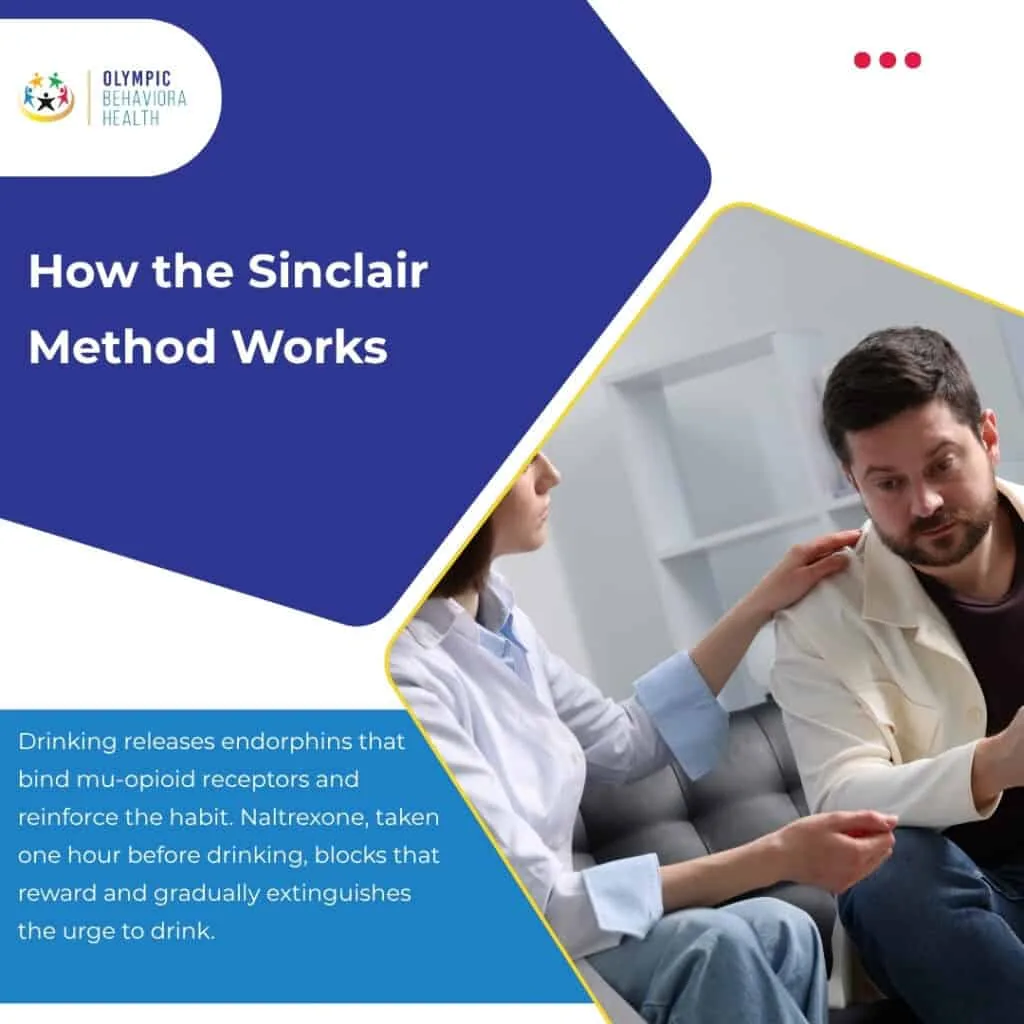
Alcohol strengthens drinking habits by releasing endorphins that activate the brain’s mu-opioid receptors.
- Endorphin reinforcement: Drinking alcohol releases endorphins that bind to mu-opioid receptors and tag the behavior as rewarding, which strengthens the urge to drink again.
- Naltrexone blockade: Naltrexone occupies mu-opioid receptors and prevents endorphins from landing, so drinking produces no reward.
- Pharmacological extinction: Repeated unrewarded drinking weakens the learned response, a process Sinclair named pharmacological extinction.
Why the One-Hour Rule Matters
The Sinclair Method requires taking naltrexone about one hour before drinking so the drug occupies receptors before alcohol arrives.
- Timing drives extinction: Naltrexone must block receptors before alcohol releases endorphins, otherwise the reward reinforces drinking as usual.
- Skipping the pill reverses progress: Drinking without the dose re-strengthens the habit loop, which undermines extinction.
- Indefinite dosing for many: Most patients keep taking naltrexone before drinking long-term to hold the response extinguished.
Rediscover Life at Olympic Behavioral Health
Get the compassionate support you deserve. We're here to help you reclaim joy, wellness, and a brighter future.
Our Facility
Sinclair Method Timeline: What to Expect
The Sinclair Method follows a gradual timeline measured in months, with cravings and intake falling as extinction progresses.
- Week 1: Patients begin taking naltrexone one hour before each drinking episode while continuing their normal routine.
- Weeks 2 to 8: Alcohol delivers less satisfaction as naltrexone blocks the reward, and many patients notice intake dropping.
- Months 3 to 4: Cravings fall substantially as pharmacological extinction takes hold, which Sinclair documented across clinical use.
- Months 6 to 12: Many patients reach controlled drinking or abstinence, though continued before-drinking dosing maintains the effect.
Naltrexone Side Effects on the Sinclair Method
Naltrexone produces mostly mild side effects, though a few require medical attention and one interaction is dangerous.
Common Side Effects
Most naltrexone side effects appear early and fade as the body adjusts.
- Nausea: Naltrexone commonly triggers early nausea, which usually resolves within the first weeks.
- Headache and fatigue: Many patients report mild headache and tiredness during initial dosing.
- Dizziness: Naltrexone occasionally produces lightheadedness, especially at the start.
Are you covered for treatment?

Olympic Behavioral Health is an approved provider for Blue Shield and Tufts while also accepting many other major insurance carriers.
Check Coverage Now!Severe Effects or When Misused
A smaller set of reactions signals a need for prompt medical evaluation.
- Liver strain: High naltrexone doses stress the liver, so clinicians monitor liver function in at-risk patients.
- Opioid overdose risk: Naltrexone blocks opioids, so anyone who stops it and resumes opioid use faces elevated overdose risk from lost tolerance.
- Precipitated withdrawal: Taking naltrexone while opioids remain in the system triggers sudden, severe withdrawal.
Seek immediate medical care if these occur:
- Yellowing skin or eyes or severe abdominal pain, which may signal liver injury.
- Signs of opioid overdose after resuming opioid use.
- Severe allergic reaction with swelling or breathing difficulty.
Long-Term Considerations
Long-term naltrexone use on the Sinclair Method stays generally safe with a few ongoing considerations.
- Indefinite dosing: Many patients take naltrexone before drinking for years to maintain extinction.
- Adherence dependence: The method only works when patients reliably dose before drinking, so missed pills reduce effectiveness.
- Medical monitoring: Periodic liver checks confirm continued safety.
Sinclair Method vs Abstinence-Based Treatment
The Sinclair Method differs from abstinence-based treatment in its goal, its use of continued drinking, and its standing in clinical guidelines.
| Feature | Sinclair Method | Abstinence-based or daily naltrexone |
|---|---|---|
| Goal | Reduced drinking through extinction | Full abstinence |
| Drinking during treatment | Required for extinction | Discouraged |
| Naltrexone timing | One hour before drinking | Daily or monthly, regardless of drinking |
| Guideline status | Not first-line | Naltrexone plus counseling is guideline-supported |
| Best fit | Motivated, non-dependent drinkers | Broad range, including dependent patients |
Did you know most health insurance plans cover substance use disorder treatment? Check your coverage online now.
Alcohol Treatment at Olympic Behavioral Health
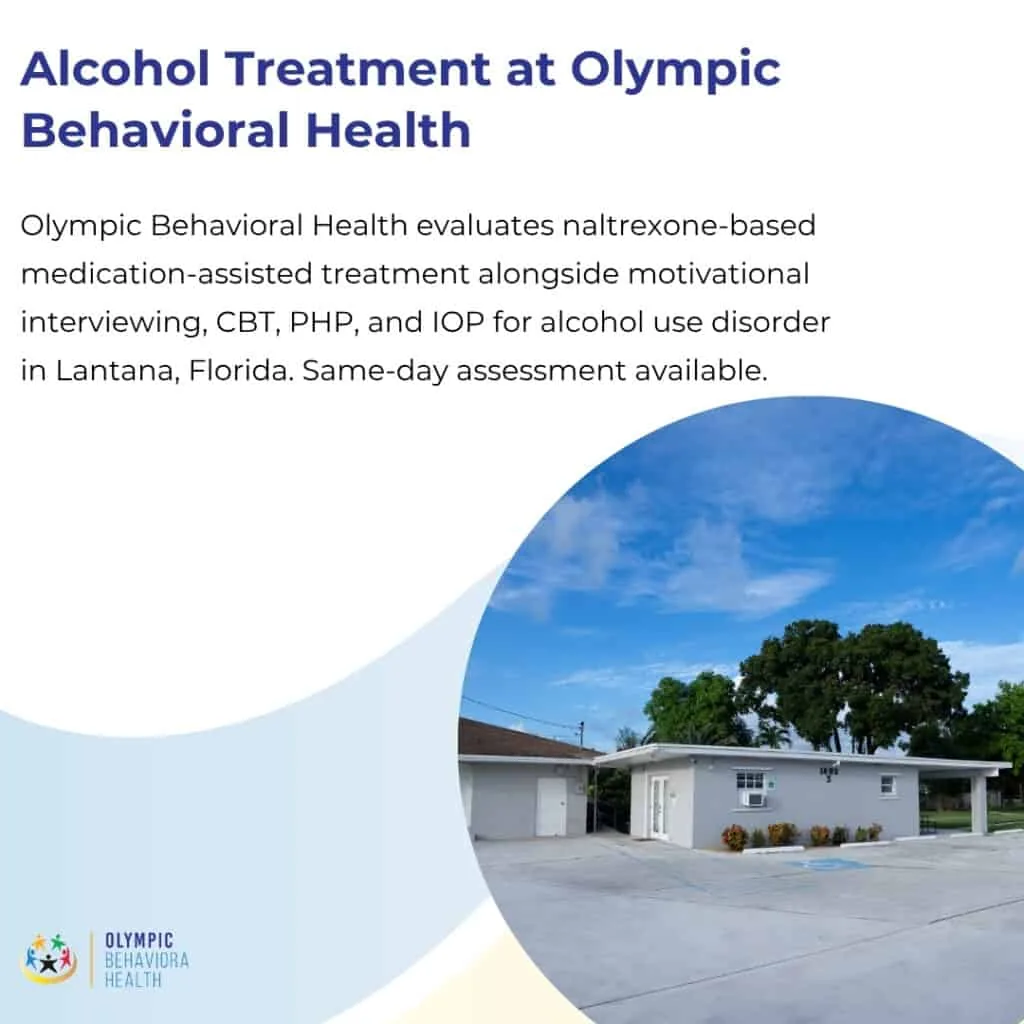
Olympic Behavioral Health treats alcohol use disorder with medication-assisted options and outpatient therapy at its West Palm Beach, Florida programs.
Medication and Outpatient Support
Olympic Behavioral Health combines medication management with structured therapy so alcohol treatment matches each client’s severity and goals.
- Alcohol use disorder care: Olympic Behavioral Health treats alcohol use disorder across levels of outpatient care.
- Medication-assisted treatment: Clinicians evaluate naltrexone and related medications as part of a broader plan.
- Emerging options: Nalmefene is approved in Europe for alcohol reduction, while researchers study GLP-1 agonists such as semaglutide for craving, currently in clinical trials.
- Intensive outpatient program: The intensive outpatient program supports clients reducing or stopping drinking while living at home.
- Partial hospitalization program: The partial hospitalization program provides higher daytime structure early in treatment.
Therapy That Supports Medication
Olympic Behavioral Health pairs medication with therapies that address the behavior and triggers behind drinking.
- Motivational interviewing: Motivational interviewing strengthens commitment for clients weighing change.
- Cognitive behavioral therapy: CBT retrains the thoughts and cues that sustain drinking.
- Relapse prevention: Relapse-prevention planning rehearses responses to high-risk situations.
- Dual diagnosis care: Integrated dual diagnosis treatment addresses anxiety or depression alongside drinking, since many people drink to self-medicate underlying distress.
“The Sinclair Method appeals to people who aren’t ready to quit entirely, and for the right candidate it can be a real bridge into recovery. What matters most is medical oversight, because naltrexone interacts with opioids and needs proper screening, dosing, and monitoring to be safe and effective.”
Sabina D. Thomas, APRN, FNP-C at Olympic Behavioral Health
Contact us today to schedule an initial assessment or to learn more about our services. Whether you are seeking intensive outpatient care or simply need guidance on your mental health journey, we are here to help.
Frequently Asked Questions
Does the Sinclair Method really work?
For many patients the Sinclair Method reduces drinking substantially, and Contral Clinics reported a 78% success rate. Results depend heavily on taking naltrexone before every drinking episode. It is not a guideline first-line treatment, so discuss it with a clinician alongside other proven options.
How long does the Sinclair Method take?
Most patients notice reduced drinking within weeks, with cravings falling substantially around months three to four. Full results often take six to twelve months. Many people continue taking naltrexone before drinking indefinitely to maintain the effect.
Rediscover Life at Olympic Behavioral Health
Get the compassionate support you deserve. We're here to help you reclaim joy, wellness, and a brighter future.
Our Facility Can you drink on naltrexone?
Yes, and the Sinclair Method specifically requires it. Patients drink while naltrexone blocks the reward, which drives the extinction the method depends on. Daily abstinence-based naltrexone use, by contrast, discourages drinking. A clinician determines which approach fits you.
Is the Sinclair Method FDA approved?
Naltrexone is FDA-approved for alcohol use disorder, but the specific before-drinking protocol is not separately approved or listed as first-line in SAMHSA or NIAAA guidelines. The medication is legitimate, while the particular schedule remains outside standard guideline recommendations.
What is the success rate of the Sinclair Method?
Contral Clinics, where the method was developed, reported a 78% success rate in reducing drinking to moderate levels. Guideline bodies note the evidence base is smaller than for standard naltrexone use. Individual results vary with adherence to the one-hour rule.
Are you covered for treatment?
Olympic Behavioral Health is an approved provider for Blue Shield and Tufts while also accepting many other major insurance carriers.
Check Coverage Now!Do you take naltrexone forever on the Sinclair Method?
Many patients continue indefinitely, because stopping the before-drinking dose lets the brain relearn the drinking reward. Some reduce frequency once drinking is well controlled. The decision rests with your prescriber based on your progress and history.
What are the side effects of naltrexone?
Naltrexone commonly causes nausea, headache, and fatigue early on, which usually fade. Less often it strains the liver, so clinicians monitor function. The most dangerous risk is taking it while opioids remain in the system, which triggers sudden withdrawal.
Is the Sinclair Method better than quitting cold turkey?
Neither is universally better. The Sinclair Method suits people not ready for abstinence and avoids the withdrawal risk of sudden quitting, while abstinence-based care suits physically dependent drinkers. Quitting heavy drinking cold turkey can be dangerous and warrants medical supervision.
Sources
- American Psychiatric Association. (2022). Diagnostic and statistical manual of mental disorders (5th ed., text rev.).
- National Institute on Alcohol Abuse and Alcoholism. (2024). Alcohol use disorder (AUD) in the United States: Age groups and demographic characteristics.
- Sinclair, J. D. (2001). Evidence about the use of naltrexone and for different ways of using it in the treatment of alcoholism. Alcohol and Alcoholism, 36(1), 2-10.
- Heinala, P., Alho, H., Kiianmaa, K., Lonnqvist, J., Kuoppasalmi, K., & Sinclair, J. D. (2001). Targeted use of naltrexone without prior detoxification in the treatment of alcohol dependence. Journal of Clinical Psychopharmacology, 21(3), 287-292.
- Jonas, D. E., Amick, H. R., Feltner, C., Bobashev, G., Thomas, K., Wines, R., et al. (2014). Pharmacotherapy for adults with alcohol use disorders in outpatient settings. JAMA, 311(18), 1889-1900.
- Substance Abuse and Mental Health Services Administration. (2023). Medications for substance use disorders.
- Eskapa, R. (2008). The cure for alcoholism: The medically proven way to eliminate alcohol addiction. BenBella Books.
- U.S. Food and Drug Administration. (2021). Naltrexone hydrochloride tablets prescribing information.
Share This Post

Adam Siegel
View profile
Lisa Alleva
View profile
Treatments we offer:
Are you covered for treatment?








Olympic Behavioral Health is an approved provider for Blue Shield and Tufts, while also accepting many other major insurance carriers.
Check Coverage Now!