Non-Addictive Anxiety Medication Options

Non-addictive anxiety medications relieve anxiety without the dependence risk benzodiazepines carry, and they include SSRIs, SNRIs, buspirone, hydroxyzine, and beta-blockers. These options treat the underlying anxiety rather than only masking symptoms in the moment.
Doctors increasingly favor these medications for long-term care, especially for people with a history of substance use. Unlike fast-acting sedatives, most non-addictive options build their effect gradually and stay safe for daily use.
Choosing the right one depends on the type of anxiety, how quickly relief is needed, and personal medical history. Each class works through a different brain mechanism and suits a different situation.
Understanding how these medications differ helps you have a clearer conversation with your prescriber.
Key Takeaways
- Non-addictive does not mean instant: SSRIs, SNRIs, and buspirone build effect over 2 to 6 weeks, while benzodiazepines work within an hour but create dependence.
- Anxiety is common and treatable: The National Institute of Mental Health reports 19.1% of US adults experience an anxiety disorder in a given year and 31.1% across their lifetime.
- SSRIs and SNRIs are first-line: Clinical guidelines position selective serotonin reuptake inhibitors and serotonin-norepinephrine reuptake inhibitors as the first-choice medications for most anxiety disorders described in the DSM-5-TR.
- Some non-addictive drugs still need caution: Gabapentinoids such as pregabalin carry lower but real misuse potential, so prescribers monitor them closely.
Did you know most health insurance plans cover substance use disorder treatment? Check your coverage online now.
What Are Non-Addictive Anxiety Medications?
Non-addictive anxiety medications reduce anxiety symptoms without producing the physical dependence or withdrawal that defines benzodiazepine use.
How These Medications Differ From Benzodiazepines
Non-addictive medications correct anxiety at its source while benzodiazepines mainly sedate the symptom.
- They target neurotransmitter systems: SSRIs raise serotonin availability and SNRIs raise both serotonin and norepinephrine, which recalibrates the brain circuits driving chronic anxiety.
- They avoid the GABA reward pathway: Benzodiazepines flood GABA receptors and build dependence, whereas buspirone and hydroxyzine bypass that pathway entirely.
- They suit long-term use: Because these drugs do not build the tolerance benzodiazepines do, prescribers use them for sustained anxiety management.
How Anxiety Is Measured
Clinicians quantify anxiety severity with the GAD-7 before and during medication treatment.
- The GAD-7 scale: The Generalized Anxiety Disorder-7 (GAD-7) measures anxiety severity across seven items scored 0 to 21, where higher totals signal greater severity.
- Validated by Spitzer and Kroenke: Robert Spitzer and Kurt Kroenke validated the GAD-7 in 2006, and prescribers now use it to guide medication decisions.
- It tracks response: Repeating the GAD-7 shows whether a chosen medication lowers symptom scores over the following weeks.
Contact us today to schedule an initial assessment or to learn more about our services. Whether you are seeking intensive outpatient care or simply need guidance on your mental health journey, we are here to help.
Why Benzodiazepines Carry Dependence Risk
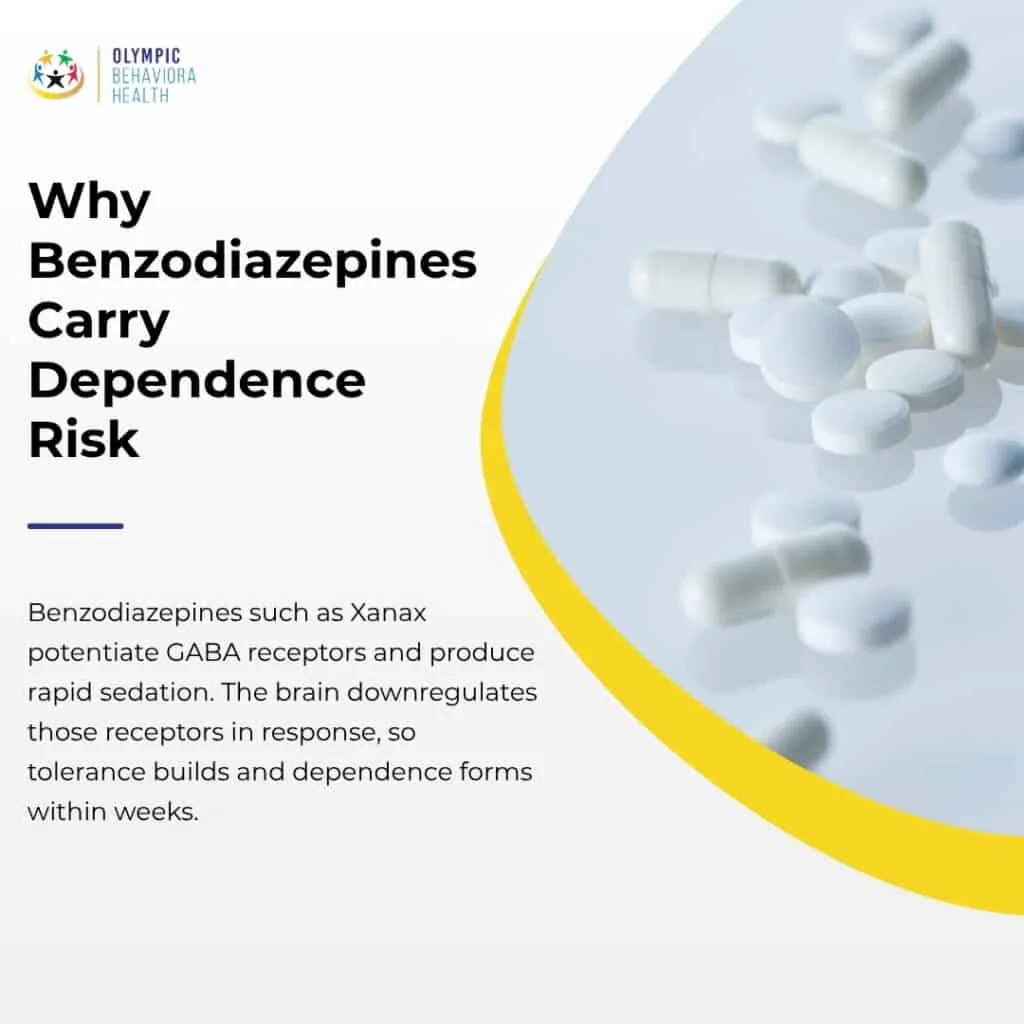
Benzodiazepines create dependence because they amplify GABA so strongly that the brain adapts and then demands the drug to feel normal.
The Neurobiology of Benzodiazepine Dependence
Repeated benzodiazepine use rewires the GABA system and builds tolerance within weeks.
- GABA overstimulation: Benzodiazepines such as Xanax potentiate GABA receptors and produce rapid sedation, which strongly reinforces repeat use.
- Tolerance and neuroadaptation: The brain downregulates GABA receptors in response, so the same dose delivers less relief and dependence forms.
- Withdrawal on stopping: Abrupt cessation triggers rebound anxiety, insomnia, and in severe cases seizures, which confirms physical dependence.
Who Should Avoid Benzodiazepines
Certain patients face elevated harm from benzodiazepines and benefit most from non-addictive alternatives.
- People with substance use history: Prior addiction raises relapse risk, so prescribers steer these patients toward non-addictive options and integrated dual diagnosis care.
- Older adults: Benzodiazepines elevate fall risk and cognitive impairment in older patients.
- Long-term anxiety patients: Chronic anxiety requires sustained treatment that benzodiazepines cannot safely provide.
Rediscover Life at Olympic Behavioral Health
Get the compassionate support you deserve. We're here to help you reclaim joy, wellness, and a brighter future.
Our Facility
Types of Non-Addictive Anxiety Medications
Non-addictive anxiety medications fall into several classes, each with a distinct mechanism, onset, and best-use scenario.
| Class | Examples | Mechanism | Onset | Dependence risk |
|---|---|---|---|---|
| SSRIs | sertraline (Zoloft), escitalopram (Lexapro), paroxetine (Paxil) | Increase serotonin availability | 2 to 6 weeks | Very low |
| SNRIs | venlafaxine (Effexor XR), duloxetine (Cymbalta) | Raise serotonin and norepinephrine | 2 to 6 weeks | Very low |
| Azapirone | buspirone (BuSpar) | 5-HT1A partial agonism | 2 to 4 weeks | None |
| Antihistamine | hydroxyzine (Vistaril, Atarax) | Blocks histamine H1 receptors | 30 to 60 minutes | None |
| Beta-blocker | propranolol | Blocks beta-adrenergic receptors | 1 to 2 hours | None |
| Gabapentinoid | gabapentin, pregabalin (Lyrica) | Reduce glutamate release | Days to weeks | Low but real |
First-Line Daily Options
SSRIs and SNRIs anchor long-term anxiety treatment because they correct the serotonin and norepinephrine systems driving the disorder.
- SSRIs: Sertraline and escitalopram raise serotonin availability and reduce generalized, social, and panic anxiety, and they also treat co-occurring depression through the same mechanism.
- SNRIs: Venlafaxine and duloxetine raise norepinephrine alongside serotonin, which helps patients whose anxiety overlaps with low energy or chronic pain.
- Emerging options: Researchers are studying ketamine and cannabidiol for treatment-resistant anxiety, both currently investigational rather than standard care.
Situational and Short-Term Options
Some non-addictive medications deliver faster relief for specific situations rather than daily control.
- Hydroxyzine: Hydroxyzine blocks histamine receptors and calms the nervous system within an hour, which suits short-term or as-needed use.
- Propranolol: Propranolol blocks adrenaline’s physical effects and controls performance-anxiety symptoms such as racing heart and tremor.
- Buspirone: Buspirone partially activates 5-HT1A serotonin receptors and reduces generalized anxiety without sedation or dependence.
Are you covered for treatment?

Olympic Behavioral Health is an approved provider for Blue Shield and Tufts while also accepting many other major insurance carriers.
Check Coverage Now!How Long Non-Addictive Anxiety Medications Take to Work
Non-addictive anxiety medications differ widely in onset, from under an hour for hydroxyzine to several weeks for SSRIs.
- 30 to 60 minutes: Hydroxyzine and propranolol produce noticeable physical calming, which makes them useful for acute or situational anxiety.
- 1 to 2 weeks: SSRIs, SNRIs, and buspirone deliver early subtle gains in sleep and tension before full mood effects appear.
- 4 to 6 weeks: SSRIs and SNRIs reach full therapeutic effect, and prescribers recheck the GAD-7 score to confirm response.
- 8 to 12 weeks: Prescribers adjust the dose or switch agents if the GAD-7 has not improved by this point.
Side Effects of Non-Addictive Anxiety Medications
Non-addictive anxiety medications carry mostly mild and manageable side effects, though a few require prompt medical attention.
Common Side Effects
Most non-addictive anxiety medications produce mild, temporary side effects during the first weeks.
- Nausea and headache: SSRIs and SNRIs commonly trigger early nausea that fades as the body adjusts.
- Drowsiness: Hydroxyzine produces sedation, which limits daytime use for some patients.
- Dizziness: SNRIs and buspirone occasionally cause lightheadedness during dose changes.
Did you know most health insurance plans cover substance use disorder treatment? Check your coverage online now.
Severe Side Effects or When Misused
A smaller set of reactions signals a need for prompt medical evaluation.
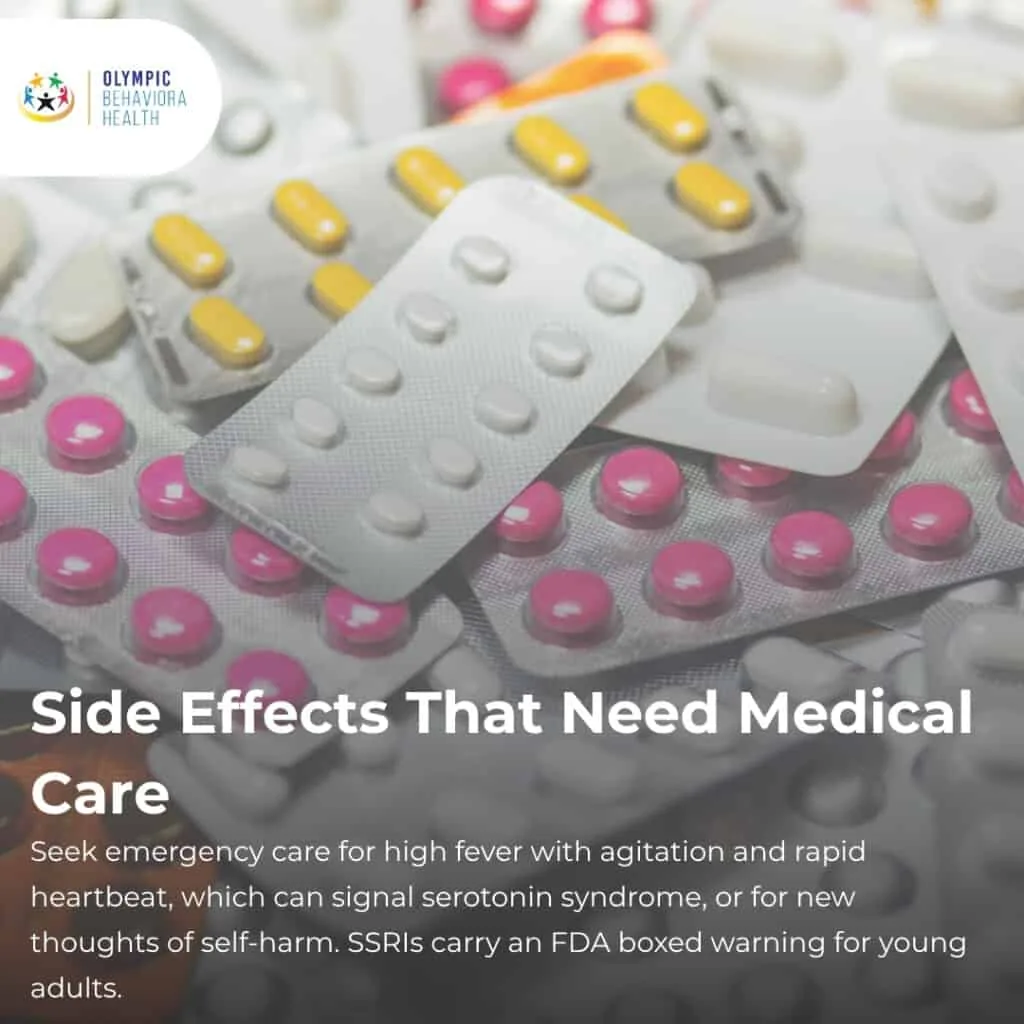
- Serotonin syndrome: Combining serotonergic drugs overloads serotonin and produces agitation, rapid heart rate, and high temperature, which demands emergency care.
- Suicidal thinking: SSRIs and SNRIs carry an FDA boxed warning for increased suicidal thoughts in young adults early in treatment, which requires close monitoring.
- Gabapentinoid misuse: Pregabalin and gabapentin produce mild euphoria at high doses, which drives their lower but real misuse potential.
Seek immediate medical care if these signs appear:
- High fever with agitation and rapid heartbeat, which may indicate serotonin syndrome.
- New or worsening thoughts of self-harm.
- Severe allergic swelling or difficulty breathing.
Long-Term Considerations
Long-term use of non-addictive anxiety medications stays safe but carries a few ongoing considerations.
- Discontinuation syndrome: Stopping SSRIs or SNRIs abruptly produces flu-like discontinuation symptoms, so prescribers taper the dose gradually.
- Sexual side effects: SSRIs commonly reduce libido, which prompts some patients to switch agents.
- Periodic review: Clinicians recheck the GAD-7 and dose at regular intervals to confirm continued benefit.
Non-Addictive Medications vs Benzodiazepines
Non-addictive medications and benzodiazepines differ most in onset speed, dependence risk, and suitability for long-term use.
| Feature | Non-addictive (SSRIs, SNRIs, buspirone) | Benzodiazepines |
|---|---|---|
| Onset | 2 to 6 weeks (hydroxyzine and propranolol faster) | Within 1 hour |
| Dependence risk | Very low to none | High |
| Withdrawal | Mild discontinuation, tapered | Rebound anxiety, seizures possible |
| Best use | Long-term daily management | Short-term or acute only |
| DSM-5-TR first-line | Yes (SSRIs and SNRIs) | No |
Contact us today to schedule an initial assessment or to learn more about our services. Whether you are seeking intensive outpatient care or simply need guidance on your mental health journey, we are here to help.
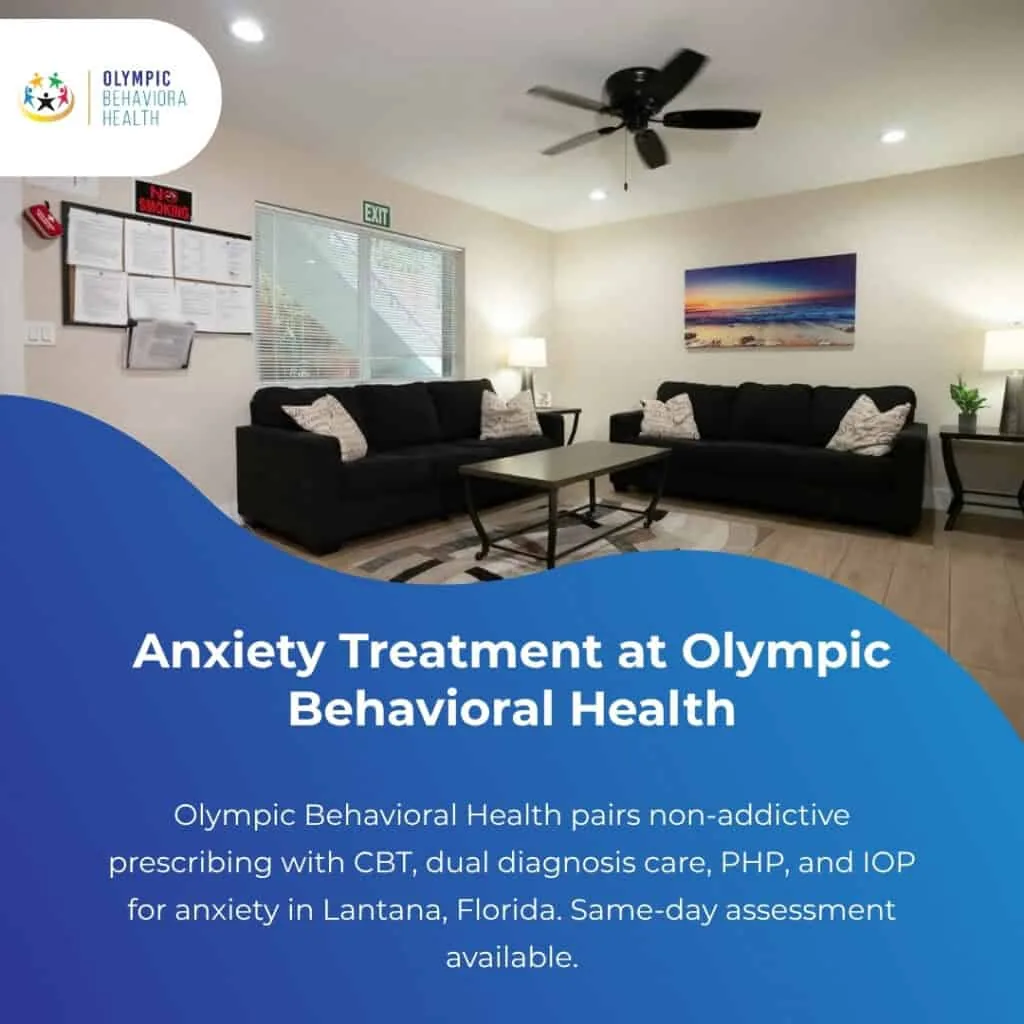
Anxiety Treatment at Olympic Behavioral Health
Olympic Behavioral Health manages anxiety and co-occurring substance use through medication and therapy at its West Palm Beach, Florida programs.
Integrated Medication and Therapy
Olympic Behavioral Health combines prescribing oversight with evidence-based therapy so anxiety treatment supports recovery rather than threatening it.
- Anxiety treatment program: The anxiety treatment program pairs non-addictive prescribing with structured therapy.
- Cognitive behavioral therapy: CBT teaches clients to restructure the anxious thoughts that medication alone cannot resolve.
- Trauma-related anxiety: Clients whose anxiety arises from trauma receive specialized PTSD care.
- Intensive outpatient program: The intensive outpatient program supports clients managing anxiety while living at home.
- Partial hospitalization program: The partial hospitalization program provides higher daytime structure for severe anxiety.
“For patients with any history of substance use, the goal is real anxiety relief without trading one dependence for another. Non-addictive medications take longer to work, so we pair them with therapy and clear expectations, and most clients find that steadier, sustainable relief is well worth the wait.”
Dr. Maryam Davari, M.D., Medical Director at Olympic Behavioral Health
Frequently Asked Questions
Rediscover Life at Olympic Behavioral Health
Get the compassionate support you deserve. We're here to help you reclaim joy, wellness, and a brighter future.
Our Facility What is the safest anxiety medication?
No single medication is safest for everyone, but SSRIs and buspirone rank among the lowest-risk options because they avoid dependence and suit long-term use. The safest choice depends on your anxiety type, medical history, and response. A prescriber matches the medication to your profile.
Is buspirone addictive?
No. Buspirone partially activates 5-HT1A serotonin receptors and produces no euphoria, tolerance, or withdrawal. This makes it one of the few anxiety medications with no dependence potential. It does require daily use for two to four weeks before reaching full effect.
Can you get addicted to hydroxyzine?
No. Hydroxyzine is an antihistamine that blocks histamine receptors rather than acting on reward pathways, so it does not cause addiction. It can cause drowsiness and is generally used short-term or as needed. Stopping it does not produce withdrawal.
Are you covered for treatment?
Olympic Behavioral Health is an approved provider for Blue Shield and Tufts while also accepting many other major insurance carriers.
Check Coverage Now!What can I take instead of Xanax?
SSRIs, SNRIs, buspirone, hydroxyzine, and propranolol all serve as non-addictive alternatives to Xanax. For daily anxiety, SSRIs or buspirone work well, while hydroxyzine or propranolol suit situational anxiety. A prescriber transitions you safely, since stopping Xanax abruptly is dangerous.
Is gabapentin addictive?
Gabapentin carries lower misuse potential than benzodiazepines but is not fully risk-free. At high doses it produces mild euphoria, which drives some misuse, especially among people with substance use history. Prescribers monitor it carefully and limit it in higher-risk patients.
How long do non-addictive anxiety medications take to work?
Hydroxyzine and propranolol work within an hour, while SSRIs, SNRIs, and buspirone take two to six weeks for full effect. Early subtle improvements often appear within one to two weeks. Clinicians recheck the GAD-7 around week four to confirm response.
Did you know most health insurance plans cover substance use disorder treatment? Check your coverage online now.
What is best for panic attacks without addiction?
SSRIs and SNRIs are first-line for preventing panic attacks over time, while propranolol blunts the physical surge during one. Hydroxyzine offers short-term relief without addiction. Daily prevention combined with therapy generally outperforms relying on as-needed medication alone.
Can I stop anxiety medication once I feel better?
Stopping requires a gradual taper guided by your prescriber, because abruptly quitting SSRIs or SNRIs triggers discontinuation symptoms. Many people continue for six to twelve months after improvement to prevent relapse. Your clinician sets the timing based on symptom history and the GAD-7.
Sources
- American Psychiatric Association. (2022). Diagnostic and statistical manual of mental disorders (5th ed., text rev.).
- National Institute of Mental Health. (2023). Any anxiety disorder.
- Spitzer, R. L., Kroenke, K., Williams, J. B. W., & Lowe, B. (2006). A brief measure for assessing generalized anxiety disorder: The GAD-7. Archives of Internal Medicine, 166(10), 1092-1097.
- Bandelow, B., Michaelis, S., & Wedekind, D. (2017). Treatment of anxiety disorders. Dialogues in Clinical Neuroscience, 19(2), 93-107.
- Strawn, J. R., Geracioti, L., Rajdev, N., Clemenza, K., & Levine, A. (2018). Pharmacotherapy for generalized anxiety disorder in adults and pediatric patients. Expert Opinion on Pharmacotherapy, 19(10), 1057-1070.
- Substance Abuse and Mental Health Services Administration. (2024). Key substance use and mental health indicators in the United States.
- U.S. Food and Drug Administration. (2018). Suicidality in children and adolescents being treated with antidepressant medications.
- National Institute on Drug Abuse. (2023). Prescription CNS depressants drug facts.
Share This Post

Adam Siegel
View profile
Lisa Alleva
View profile
Treatments we offer:
Are you covered for treatment?








Olympic Behavioral Health is an approved provider for Blue Shield and Tufts, while also accepting many other major insurance carriers.
Check Coverage Now!