Heroin Addiction: Symptoms, Effects, Withdrawal & Treatment

Heroin addiction, clinically known as heroin use disorder, is a chronic brain disease characterized by compulsive heroin use despite harmful consequences. It develops when repeated heroin use changes the brain’s reward system, leading to tolerance, physical dependence, and intense cravings.
Heroin is a Schedule I opioid derived from morphine. Although it produces short-term euphoria and pain relief, long-term use is associated with severe health risks, overdose, and death.
According to the CDC, opioid-related deaths continue to rise in the United States, with heroin and fentanyl playing a major role in overdose fatalities. In 2022 alone, drug overdose deaths exceeded 107,000 nationwide.
The good news is that heroin addiction is treatable, and recovery is possible with evidence-based care.
What Is Heroin Addiction?
Heroin addiction is a chronic opioid use disorder involving physical dependence, psychological cravings, and compulsive heroin use despite negative consequences.
Hser et al. (2015) reported that opioid use disorder, particularly heroin use disorder, is a chronic, relapsing disease with a mortality rate up to 20 times higher than the general population, as detailed in “Long-term Course of Opioid Addiction.”
Heroin is rapidly converted into morphine in the brain and binds to mu-opioid receptors, triggering a powerful dopamine surge. Over time, this disrupts normal brain chemistry.
DSM-5 Criteria for Opioid Use Disorder
A diagnosis involves at least two of the following within 12 months:
- Using larger amounts than intended
- Unsuccessful attempts to cut down
- Intense cravings
- Failure to meet work or family obligations
- Continued use despite relationship problems
- Tolerance (needing more to feel effects)
- Withdrawal symptoms
The National Institute on Drug Abuse (NIDA) describes heroin addiction as a relapsing brain disorder that alters decision-making, impulse control, and stress regulation.
Did you know most health insurance plans cover substance use disorder treatment? Check your coverage online now.
What Is Heroin?
Heroin is a highly addictive opioid drug derived from morphine, a natural substance extracted from the seed pods of the opium poppy (Papaver somniferum). Chemically, heroin is diacetylmorphine, briskly metabolizing into morphine upon entering the body, producing intense effects, and is classified as a Schedule I controlled substance in the United States, meaning it has a high potential for abuse and no accepted medical use.
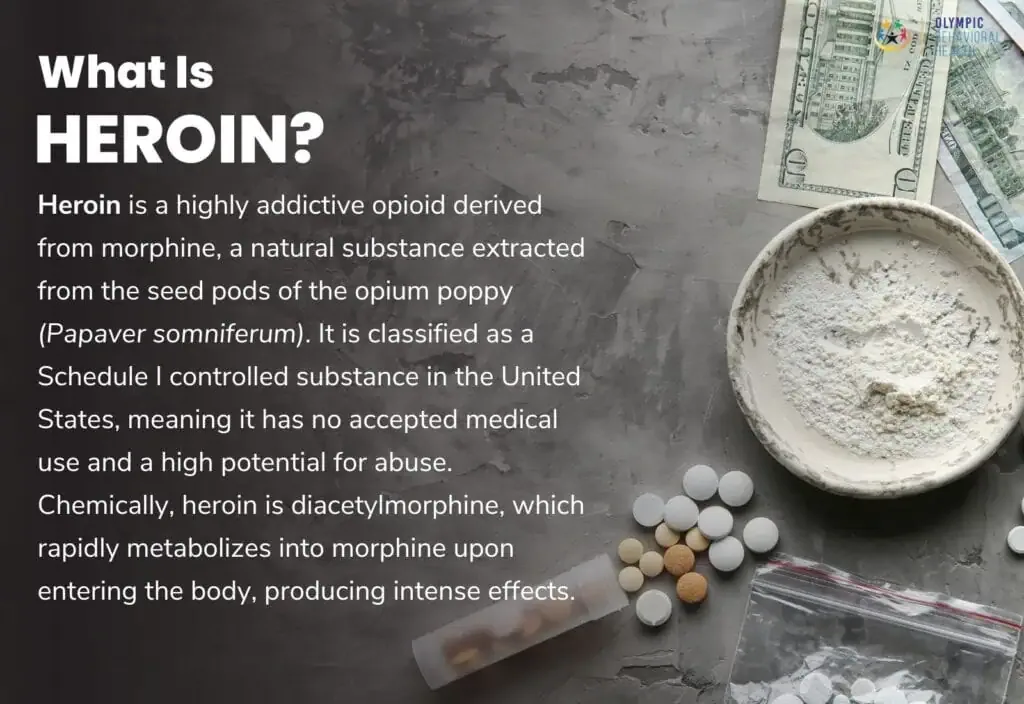
As an opioid, heroin belongs to the narcotic analgesic drug class, which affects the central nervous system by binding to opioid receptors in the brain, producing intense euphoria and pain relief. In 2021, approximately 1.1 million people in the U.S. reported using heroin at least once in the past year, highlighting its prevalence despite its illegal status, according to the National Survey on Drug Use and Health by the Substance Abuse and Mental Health Services Administration (2021).
Why Is Heroin So Addictive?
Heroin is highly addictive because it:
- Acts quickly, especially when injected
- Produces an intense euphoric “rush.”
- Rapidly increases dopamine levels
- Causes severe withdrawal symptoms
Repeated exposure reduces the brain’s natural dopamine production. Over time, individuals rely on heroin just to feel normal.
Tolomeo et al. (2021) found that chronic heroin use may affect:
- Memory
- Impulse control
- Decision-making
- White matter integrity
These neurological changes reinforce compulsive drug-seeking behavior.
What are The Signs and Symptoms of Heroin Addiction?
Signs and symptoms of heroin addiction are categorized as physical, behavioral, and psychological manifestations of the chronic opioid use disorder. Here are the signs:
Contact us today to schedule an initial assessment or to learn more about our services. Whether you are seeking intensive outpatient care or simply need guidance on your mental health journey, we are here to help.
Physical Signs
- Constricted (pinpoint) pupils
- Track marks on arms
- Sudden weight loss
- Frequent itching
- Slurred speech
- Drowsiness (“nodding off”)
- Poor hygiene
Behavioral Signs
- Secretive behavior
- Financial problems
- Doctor shopping
- Isolation from family
- Neglecting responsibilities
Psychological Symptoms
- Depression
- Anxiety
- Mood swings
- Cravings
- Loss of motivation
Rediscover Life at Olympic Behavioral Health
Get the compassionate support you deserve. We're here to help you reclaim joy, wellness, and a brighter future.
Our Facility
What Are Some Short-Term Effects of Heroin?
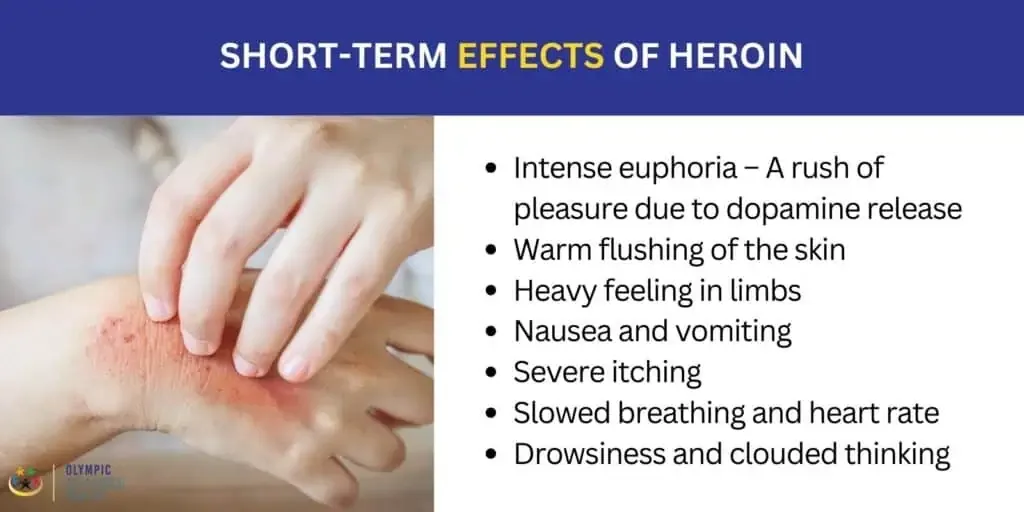
Heroin’s short-term effects typically begin within seconds to minutes and include:
- Intense euphoria
- Warm flushing of the skin
- Heavy limbs
- Nausea or vomiting
- Slowed breathing
- Suppressed cough reflex
- Decreased heart rate
What Are The Long-Term Effects of Heroin Use?
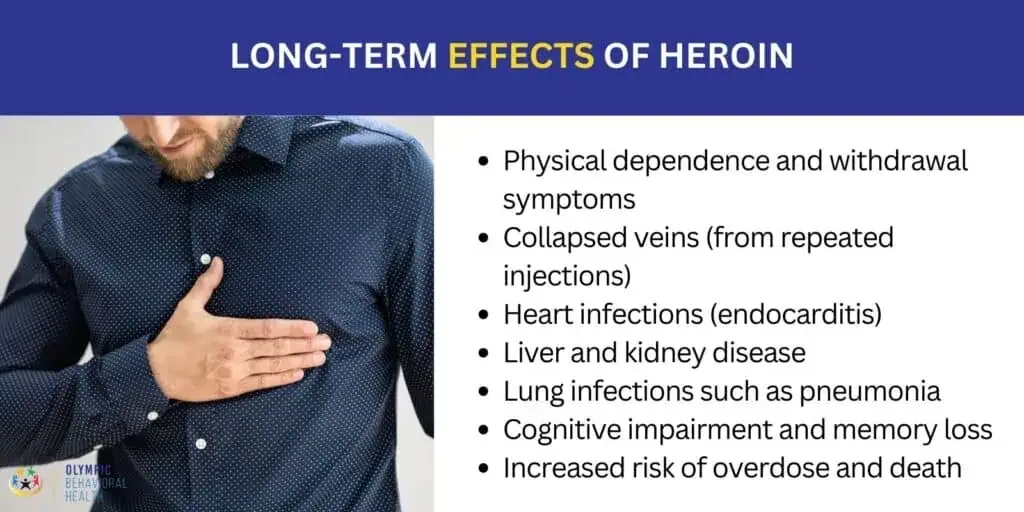
Long-term heroin use leads to severe and life-threatening complications.
| System Affected | Long-Term Effects |
| Brain | Cognitive impairment, memory loss |
| Cardiovascular | Endocarditis (heart infection) |
| Liver/Kidneys | Organ failure |
| Immune System | Increased infection risk |
| Respiratory | Pneumonia, chronic lung disease |
| Skin | Abscesses, collapsed veins |
| Hormonal | Sexual dysfunction |
Jolley et al. (2015) found that about 50% of heroin users experience suppressed breathing and weakened lung function, increasing their risk of respiratory infections and chronic lung disease, as noted in “Understanding Heroin Overdose.”
What Are the Common Heroin Withdrawal Symptoms and Their Typical Timeline?
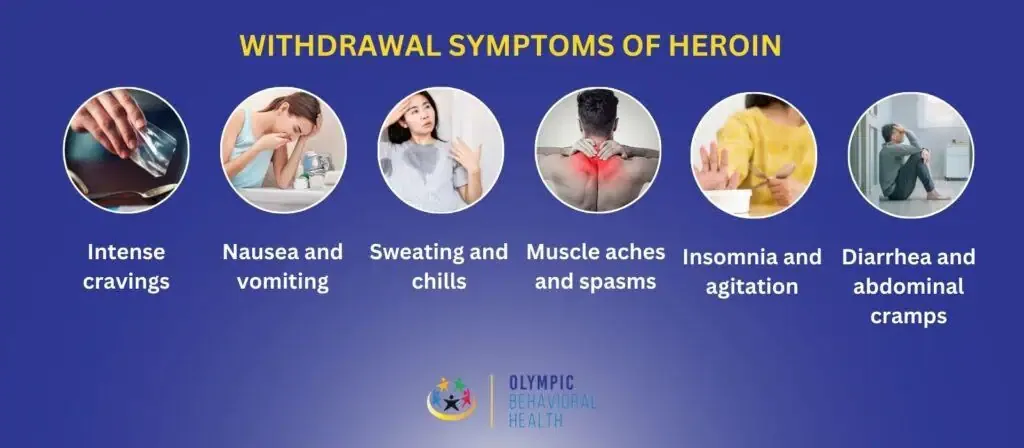
The common heroin withdrawal symptoms include nausea, vomiting, sweating, chills, muscle aches, insomnia, agitation, and anxiety. The typical timeline begins within 6–12 hours after last use and can extend for months. While heroin withdrawal can be intensely uncomfortable, it is usually not fatal when medically supervised.
Heroin Withdrawal Symptoms:
- Nausea
- Vomiting
- Diarrhea
- Muscle pain
- Insomnia
- Dilated pupils
- Rapid heart rate
- Intense cravings
Heroin Withdrawal Timeline:
| Time After Last Use | Symptoms |
| 6–12 hours | Anxiety, muscle aches, sweating |
| 1–3 days | Peak symptoms: vomiting, diarrhea, chills |
| 4–7 days | Symptoms gradually decrease |
| Weeks 2–4 | Insomnia, depression |
| Months | Post-acute withdrawal (cravings, mood instability) |
Are you covered for treatment?

Olympic Behavioral Health is an approved provider for Blue Shield and Tufts while also accepting many other major insurance carriers.
Check Coverage Now!Can You Die From Heroin Withdrawal?
Yes. While heroin withdrawal itself is rarely fatal, certain complications can raise the risk of death, including:
- Severe dehydration
- Electrolyte imbalance
- Heart conditions
- Relapse after detox
Relapse after detox is especially dangerous because tolerance is reduced, increasing overdose risk. If you or someone you know is in withdrawal, seek medical support immediately.
How Long Does Heroin Stay in Your System?
Heroin remains detectable in your system for varying durations depending on the type of drug test used.
Detection depends on test type:
| Test Type | Detection Window |
| Blood | Up to 6 hours |
| Urine | 1–3 days |
| Saliva | Up to 24 hours |
| Hair | Up to 90 days |
Heroin has a half-life of 2–6 minutes, but its metabolite morphine remains detectable longer.
What Are the Signs of a Heroin Overdose and How Should You Respond?
A heroin overdose is a critical medical emergency that requires immediate action. Recognizing the signs of an overdose can be life-saving.
Signs of Heroin Overdose:
- Slow or shallow breathing
- Blue lips or skin
- Pinpoint pupils
- Weak pulse
- Unconsciousness
- Gurgling sounds
In 2022, there were 5,871 drug overdose deaths involving heroin, with a rate of 1.8 deaths per 100,000 population, as established by the National Vital Statistics System – Mortality Data via CDC WONDER.
Emergency Response Steps
- Call Emergency Services: Immediately dial emergency services for help.
- Check Responsiveness: Gently try to wake the person by shaking them and shouting.
- Administer Naloxone: Naloxone (Narcan) reverses an opioid overdose by blocking opioid receptors. CDC reports over 2.1 million naloxone prescriptions were dispensed in 2023.
- Perform Rescue Breathing: If the person is unresponsive and breathing is slow or absent, begin rescue breathing:
- Pinch their nose shut and either cover their mouth with yours or use a barrier device.
- Give 2 breaths (1 second each) to inflate the lungs.
- Perform CPR if Necessary: If there is no pulse, begin CPR. Push hard and fast in the center of the chest, about 100-120 compressions per minute.
- Stay with the Person: Continue until emergency responders arrive or the person begins to show signs of recovery, such as regaining consciousness or resuming normal breathing.
Did you know most health insurance plans cover substance use disorder treatment? Check your coverage online now.
What Are the Dangers of Fentanyl-Laced Heroin?
The dangers of fentanyl-laced heroin include:
- Fentanyl is 50 times stronger than heroin, making even a small dose extremely dangerous.
- Fentanyl is mixed into heroin without the user’s knowledge, increasing the risk of overdose.
- This potent opioid is responsible for a large portion of opioid-related deaths.
- Currently, over 20% of opioid overdoses in the United States involve synthetic opioids like fentanyl alone. In Florida, there were 67 heroin overdose deaths in December 2023, while fentanyl was the cause of 5,622 overdose deaths in 2022, with 22 teenagers (<18) and 336 young adults aged 18-24 among the victims, according to the Florida Department of Law Enforcement (FDLE).
What Are The Risk Factors for Developing Heroin Addiction?
The risk factors for developing heroin addiction include:
- Family history of addiction
- Trauma or PTSD
- Mental health disorders
- Misuse of prescription opioids
- Chronic pain
Approximately 80% of heroin users initially misused prescription opioids (NCDAS).
How Is Heroin Addiction Treated?
Heroin addiction is treated using a combination of medical detoxification, medication-assisted treatment (MAT), behavioral therapy, and structured rehabilitation programs. Effective heroin addiction treatment programs address both the physical dependence on opioids and the psychological drivers of addiction.
Because heroin use disorder is a chronic brain condition, long-term treatment and relapse prevention planning are essential for sustained recovery.
Contact us today to schedule an initial assessment or to learn more about our services. Whether you are seeking intensive outpatient care or simply need guidance on your mental health journey, we are here to help.
Medical Detox (Withdrawal Management)
Medical detox is the first stage of heroin addiction treatment and focuses on safely managing withdrawal symptoms.
During medical detox, individuals are monitored by medical professionals who:
- Manage dehydration and electrolyte imbalances
- Reduce nausea, muscle pain, and anxiety
- Monitor vital signs
- Prevent complications
- Reduce relapse risk during early withdrawal
Although heroin withdrawal is rarely fatal, symptoms can be extremely uncomfortable and increase the likelihood of relapse. Medical supervision improves safety and comfort.
Medication-Assisted Treatment (MAT)
Medication-Assisted Treatment (MAT) uses FDA-approved medications to reduce cravings, ease withdrawal symptoms, and prevent relapse. Research consistently shows MAT lowers overdose risk and improves long-term recovery outcomes.
- Methadone – A long-acting opioid agonist that prevents withdrawal and reduces illicit opioid use when properly monitored.
- Buprenorphine (Suboxone) – A partial opioid agonist that reduces cravings with a ceiling effect that lowers overdose risk.
- Naltrexone – An opioid antagonist that blocks heroin’s effects and helps prevent relapse after detox.
These medications reduce cravings, stabilize brain chemistry, and significantly improve treatment retention rates.
Behavioral Therapy
Behavioral therapy helps individuals address the emotional, psychological, and behavioral patterns linked to heroin use.
- Cognitive Behavioral Therapy (CBT) – Identifies and changes destructive thought patterns.
- Contingency Management – Uses positive reinforcement to encourage sobriety.
- Trauma-informed therapy – Addresses PTSD and unresolved trauma, which are common in opioid use disorder.
When combined with MAT, therapy improves the success of long-term recovery.
Rediscover Life at Olympic Behavioral Health
Get the compassionate support you deserve. We're here to help you reclaim joy, wellness, and a brighter future.
Our Facility Inpatient & Outpatient Rehab
Rehabilitation programs provide structure, accountability, and ongoing support.
- Inpatient rehab offers 24/7 supervision in a controlled, trigger-free environment and is often recommended for severe addiction or repeated relapse.
- Outpatient rehab allows individuals to receive therapy and medical care while maintaining work, school, or family responsibilities.
The appropriate level of care depends on addiction severity, mental health conditions, relapse history, and home stability.
Share This Post

Adam Siegel
View profile
Lisa Alleva
View profile
Treatments we offer:
Are you covered for treatment?








Olympic Behavioral Health is an approved provider for Blue Shield and Tufts, while also accepting many other major insurance carriers.
Check Coverage Now!