What Is Gray Area Drinking? Signs and Risks

Gray area drinking describes a pattern of alcohol use between moderate social drinking and diagnosable alcohol use disorder, and it is not a formal DSM-5-TR diagnosis. The drinker functions normally but quietly questions the role alcohol plays in daily life.
This middle zone rarely produces dramatic consequences, so most people in it never label the habit a problem. The absence of obvious harm masks a slow shift from choice toward routine.
Many gray area drinkers reach for alcohol to manage stress, then notice the relief shrinking while the amount climbs. That quiet creep is exactly what makes the pattern hard to name and easy to ignore.
Key Takeaways
- Gray area drinking is a spectrum position, not a diagnosis: It occupies the space between low-risk drinking and the alcohol use disorder defined in the DSM-5-TR, so routine screening often misses it.
- The pattern sits just below a widespread disorder: The NIAAA 2024 National Survey on Drug Use and Health counted 27.9 million Americans aged 12 and older with past-year alcohol use disorder, and gray area drinkers cluster right beneath that line.
- The term was coined by Jolene Park: Functional nutritionist Jolene Park introduced gray area drinking in a 2017 TEDx talk to name drinking that generates internal worry without external crisis.
- Early screening widens treatment options: The AUDIT-C flags risky drinking before dependence forms, which gives gray area drinkers the broadest range of effective interventions.
Did you know most health insurance plans cover substance use disorder treatment? Check your coverage online now.
What Is Gray Area Drinking?
Gray area drinking defines alcohol consumption that exceeds low-risk guidelines yet falls short of the DSM-5-TR criteria for alcohol use disorder.
How Experts Define the Gray Zone
Addiction researchers position gray area drinking on a continuum that runs from abstinence through social drinking to severe alcohol use disorder.
- Above the low-risk threshold: The NIAAA sets higher-risk drinking at more than 4 drinks per day or 14 per week for men and more than 3 per day or 7 per week for women, and gray area drinkers frequently cross these limits.
- Below physical dependence: Gray area drinkers do not experience the withdrawal that signals alcohol use disorder, so their bodies have not formed full dependence.
- Defined by internal conflict: Jolene Park frames the gray zone through the worry drinking generates rather than a fixed drink count, which separates self-regulation from self-medication.
Who Tends to Fall Into Gray Area Drinking
Gray area drinking concentrates among high-functioning adults who use alcohol to regulate stress rather than to chase intoxication.
- Chronic stress carriers: Prolonged stress elevates cortisol and primes the reward system to seek the calm that alcohol delivers, which pulls stressed adults toward nightly drinking.
- People with untreated anxiety: Underlying anxiety pushes many drinkers to self-medicate, and untreated anxiety reinforces the cycle.
- Adults in life transition: Divorce, grief, and career change increase reliance on alcohol as a coping tool.
Contact us today to schedule an initial assessment or to learn more about our services. Whether you are seeking intensive outpatient care or simply need guidance on your mental health journey, we are here to help.
What Causes Gray Area Drinking?
Gray area drinking emerges from neurobiological, psychological, and environmental drivers that quietly convert occasional drinking into a daily habit.
Neurobiological Drivers
Repeated drinking rewires the brain’s reward and habit systems long before dependence appears.
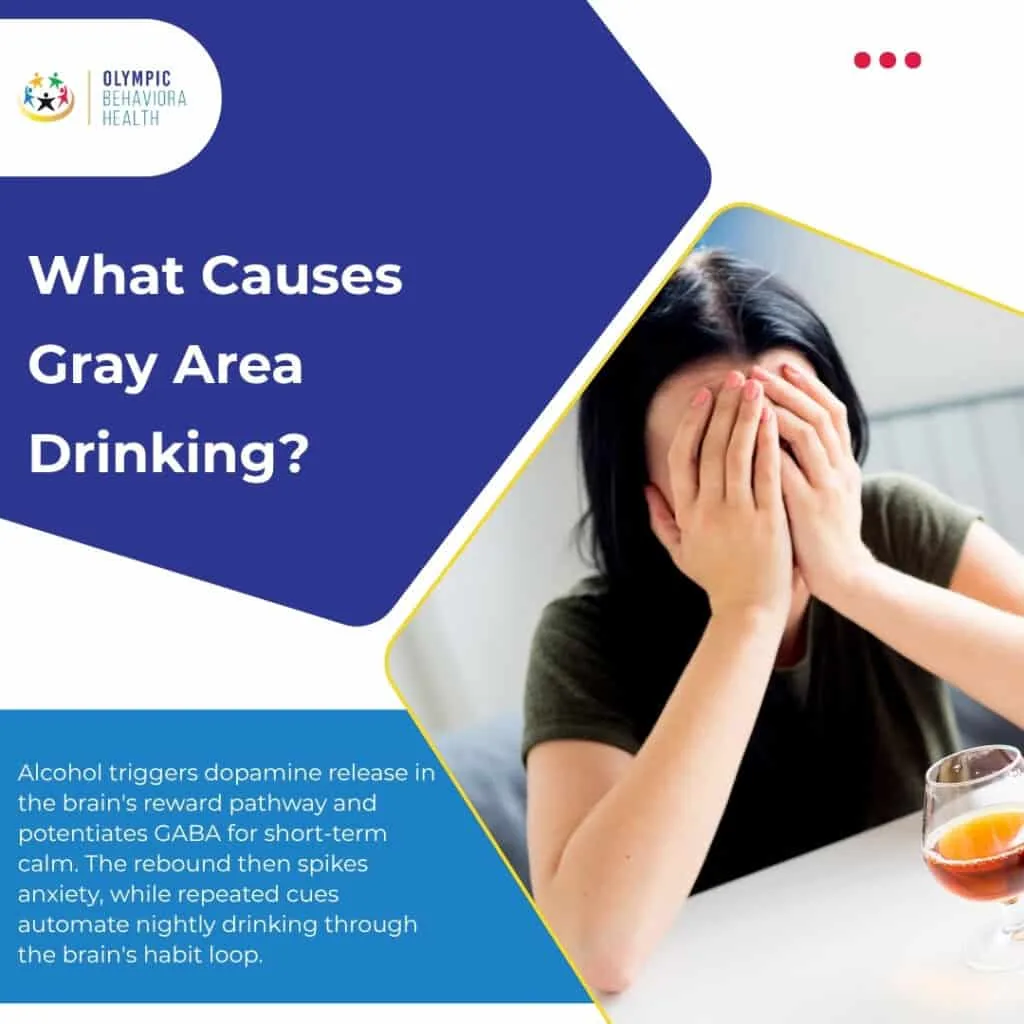
- Dopamine reinforcement: Alcohol triggers dopamine release in the mesolimbic reward pathway, which tags drinking as rewarding and strengthens the urge to repeat it.
- GABA rebound and hangxiety: Alcohol potentiates GABA activity to produce calm, then the rebound suppresses GABA and spikes anxiety once it clears, producing the morning unease known as hangxiety.
- Habit-loop automation: The basal ganglia converts repeated cue, drink, and reward sequences into automatic loops, so evening drinking runs on autopilot rather than choice.
Psychological and Environmental Drivers
Stress, emotion regulation, and cultural normalization push drinkers deeper into the gray zone.
- Self-medication of distress: Drinkers use alcohol to blunt stress and low mood, which the self-medication model identifies as a primary route into problem drinking.
- Cultural normalization: Marketing that celebrates nightly wind-down rituals normalizes daily drinking and hides escalation.
- Tolerance and neuroadaptation: Sustained intake drives neuroadaptation, so the brain demands more alcohol for the same relief, which the allostatic load framework explains as a resetting of the body’s stress baseline.
Rediscover Life at Olympic Behavioral Health
Get the compassionate support you deserve. We're here to help you reclaim joy, wellness, and a brighter future.
Our Facility
How Gray Area Drinking Escalates Over Time
Gray area drinking rarely stays static, and the same neuroadaptation that builds tolerance gradually pushes consumption toward alcohol use disorder.
| Stage | Weekly pattern | Brain change | Risk marker |
|---|---|---|---|
| Low-risk social | Within NIAAA limits | Stable reward response | Minimal |
| Early gray area | Most days, 1 to 3 drinks | Rising tolerance | Hangxiety appears |
| Deep gray area | Daily, exceeding limits | Neuroadaptation and habit loop | Failed cutback attempts |
| Mild alcohol use disorder | Loss of control | Dependence forming | Meets 2 to 3 DSM-5-TR criteria |
Signs the Pattern Is Escalating
Specific behavioral shifts mark the slide from gray area drinking toward alcohol use disorder.
- Rising tolerance: Needing more alcohol for the same effect signals neuroadaptation in the reward system.
- Broken moderation rules: Repeatedly exceeding self-set limits shows alcohol overriding intention.
- Worsening morning anxiety: Deepening hangxiety reflects the GABA rebound intensifying with heavier use.
Signs and Symptoms of Gray Area Drinking
Gray area drinking produces emotional, behavioral, and physical signs, and the AUDIT-C (Alcohol Use Disorders Identification Test-Concise) screens for them across three questions scored 0 to 12.
Are you covered for treatment?

Olympic Behavioral Health is an approved provider for Blue Shield and Tufts while also accepting many other major insurance carriers.
Check Coverage Now!Common Signs of Gray Area Drinking
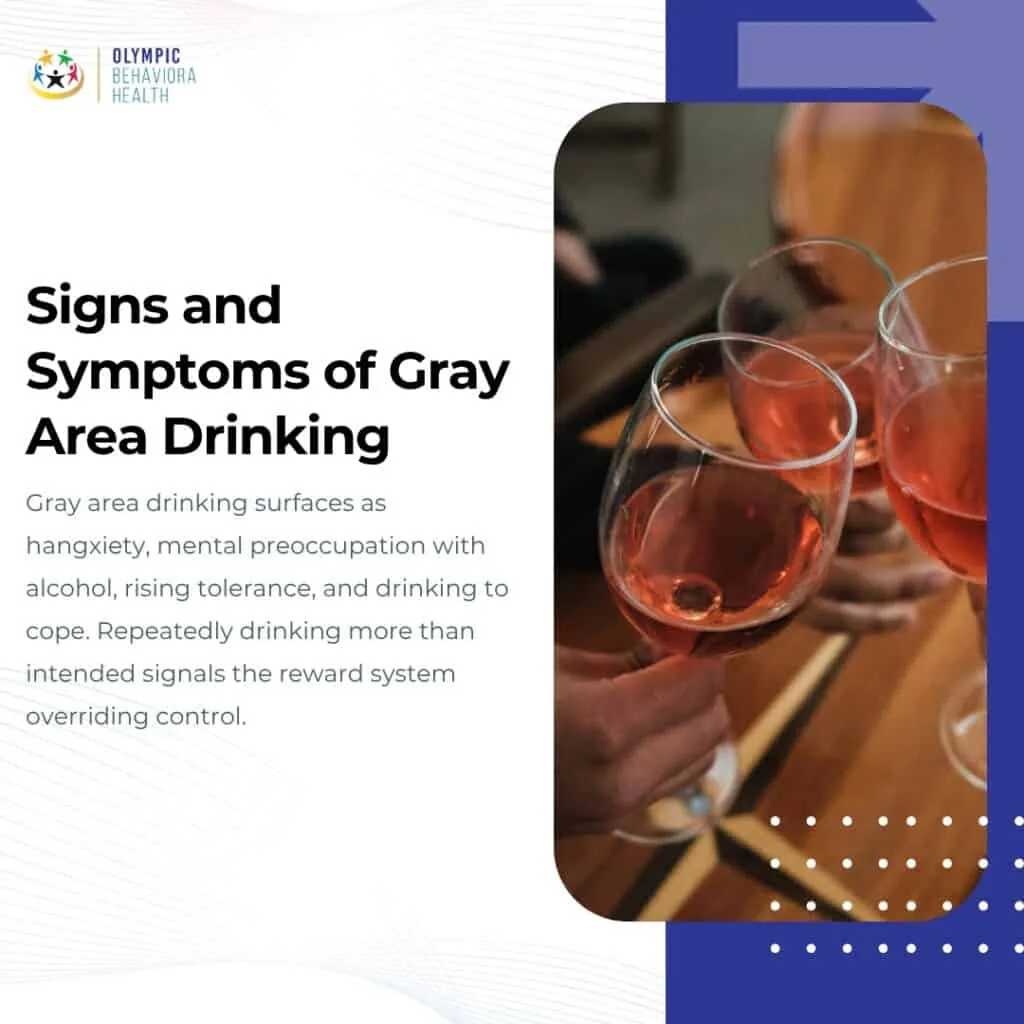
Early gray area drinking surfaces mainly as emotional and cognitive preoccupation with alcohol.
- Mental preoccupation: Ongoing internal negotiation about when and how much to drink occupies daily thinking.
- Hangxiety: Anxiety the morning after drinking reflects the GABA rebound and signals the nervous system overcorrecting.
- Guilt and secrecy: Hiding bottles or minimizing intake reveals private concern the drinker has not voiced.
- Drinking to cope: Reaching for alcohol after stress shows it has become the primary emotion-regulation tool.
Severe Signs or When Misused
Heavier gray area drinking generates clearer behavioral and physical warning signs.
- Loss of control: Regularly drinking more than intended marks the reward system overriding the prefrontal cortex.
- Escalating tolerance: Climbing amounts confirm neuroadaptation in the brain’s reward circuits.
- Blackouts: Memory gaps during drinking show alcohol suppressing hippocampal function and signal high-risk consumption.
- Failed quit attempts: Repeated unsuccessful breaks reveal the habit loop resisting conscious effort.
Seek medical care promptly if these withdrawal signs appear:
- Tremors or shaking when alcohol wears off.
- Sweating, racing heart, or nausea between drinks.
- Anxiety or agitation that only drinking relieves.
These signs point to physical dependence beyond the gray area and warrant medically supervised detox.
Long-Term Risks of Gray Area Drinking
Sustained gray area drinking compounds physical and psychiatric risk even without full dependence.
- Progression to alcohol use disorder: Continued neuroadaptation drives the pattern across the threshold into a diagnosable disorder.
- Worsening mood: Chronic alcohol depletes serotonin and dysregulates mood, which deepens anxiety and depression.
- Physical decline: Regular drinking elevates blood pressure and disrupts sleep architecture, and shifting weight changes often follow.
Did you know most health insurance plans cover substance use disorder treatment? Check your coverage online now.
Gray Area Drinking vs Alcohol Use Disorder
Gray area drinking differs from alcohol use disorder primarily in the presence of physical dependence and loss of control.
| Feature | Gray area drinking | Alcohol use disorder |
|---|---|---|
| Control | Usually drinks within intended limits, occasionally exceeds | Persistent inability to limit intake |
| Physical dependence | Absent | Withdrawal when stopping |
| DSM-5-TR criteria met | 0 to 1 | 2 or more (mild 2 to 3, moderate 4 to 5, severe 6 or more) |
| Daily function | Largely intact | Increasingly impaired |
| Screening | AUDIT-C flags risk | AUDIT and DSM-5-TR confirm diagnosis |
How to Address Gray Area Drinking
Treatment for gray area drinking ranges from brief behavioral intervention to structured outpatient care, matched to how entrenched the pattern has become.
First-Line Behavioral Therapies
Evidence-based talk therapies target the thoughts and cues that sustain gray area drinking.
- Cognitive behavioral therapy: CBT retrains the thought patterns linking stress to drinking and builds alternative coping skills.
- Motivational interviewing: Motivational interviewing resolves the ambivalence gray area drinkers feel and strengthens commitment to change.
- Brief intervention: A short, structured brief intervention helps early-stage drinkers cut back before dependence forms.
Contact us today to schedule an initial assessment or to learn more about our services. Whether you are seeking intensive outpatient care or simply need guidance on your mental health journey, we are here to help.
Pharmacological Support
Medication reduces cravings for gray area drinkers who struggle to moderate on their own.
- Naltrexone: Naltrexone blocks mu-opioid receptors and dampens alcohol’s reward, which lowers craving and heavy-drinking days.
- Acamprosate: Acamprosate stabilizes the glutamate and GABA balance to ease early abstinence.
Adjunct and Emerging Options
Additional supports extend results when therapy and medication alone fall short.
- Relapse prevention: Structured relapse-prevention planning identifies triggers and rehearses responses.
- Group and peer support: Group therapy reduces the isolation that fuels drinking.
- Emerging treatments: Researchers are testing psilocybin-assisted therapy and the GLP-1 agonist semaglutide for alcohol craving, both currently in clinical trials rather than standard care.
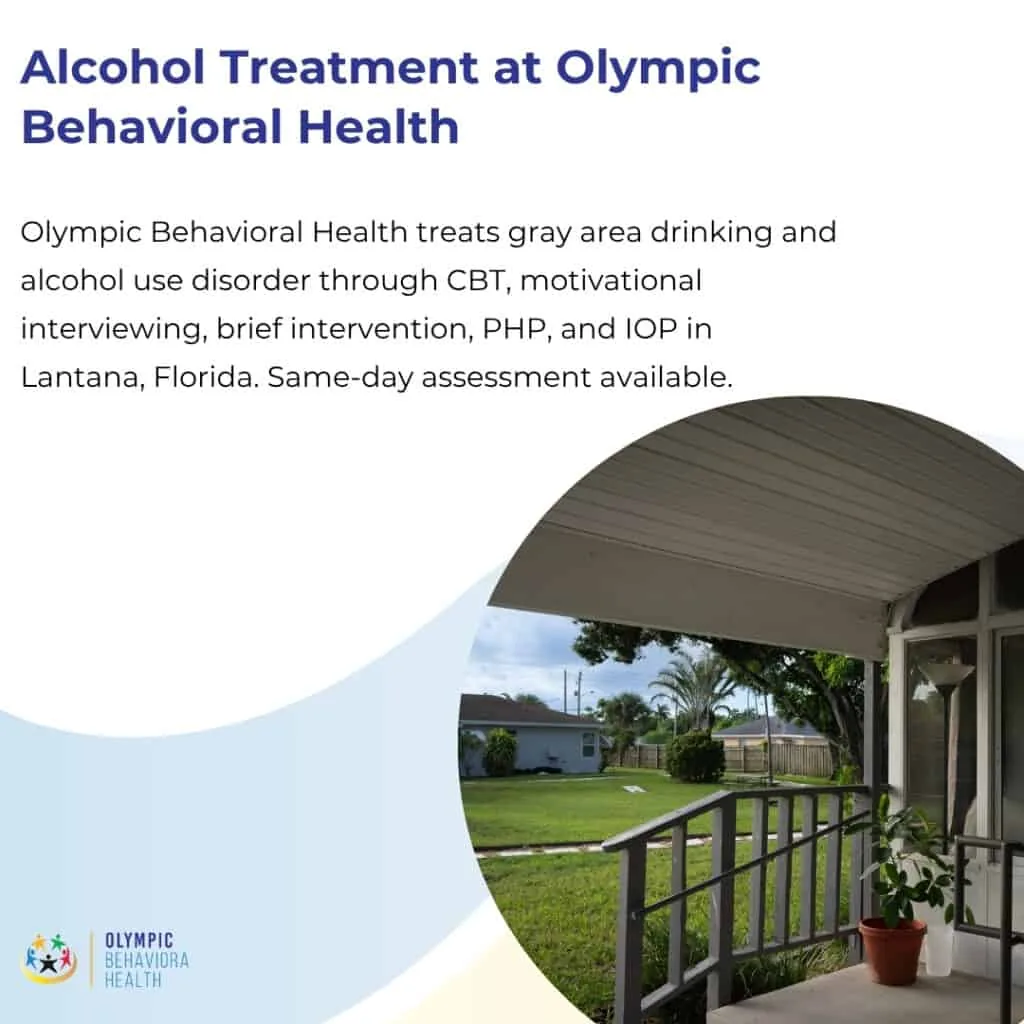
Alcohol Treatment at Olympic Behavioral Health
Olympic Behavioral Health treats gray area drinking and alcohol use disorder through outpatient programs in West Palm Beach, Florida.
Rediscover Life at Olympic Behavioral Health
Get the compassionate support you deserve. We're here to help you reclaim joy, wellness, and a brighter future.
Our Facility Outpatient Programs for Early-Stage Drinking
Olympic Behavioral Health structures care so gray area drinkers can address alcohol use without pausing work or family life.
- Intensive outpatient program: The intensive outpatient program delivers structured therapy hours while clients live at home.
- Partial hospitalization program: The partial hospitalization program provides higher daytime support for clients who need more structure.
- Dual diagnosis care: Integrated dual diagnosis treatment addresses the anxiety or depression that often drives gray area drinking, since many people drink to self-medicate underlying distress.
“Most people in the gray area are not in crisis, which is exactly why early therapy works so well. When we treat the stress and the thinking patterns behind the drinking before dependence sets in, clients regain control faster and with far less disruption to their lives.”
Lisa Alleva, LMFT, Ph.D., Clinical Director at Olympic Behavioral Health
Frequently Asked Questions
Is gray area drinking an official diagnosis?
No. Gray area drinking is not a formal DSM-5-TR diagnosis. The term describes drinking that causes concern but does not meet alcohol use disorder criteria. It functions as a practical label that encourages early reflection and screening.
Are you covered for treatment?
Olympic Behavioral Health is an approved provider for Blue Shield and Tufts while also accepting many other major insurance carriers.
Check Coverage Now!How do I know if I’m a gray area drinker?
You may be a gray area drinker if you regularly drink more than you intend, feel guilt or anxiety about it, yet show no physical withdrawal. The AUDIT-C screen flags this pattern. Persistent private worry about your drinking is itself a meaningful signal worth raising with a clinician.
How much drinking counts as gray area drinking?
Gray area drinking generally exceeds the NIAAA low-risk limits of 14 drinks per week for men and 7 for women without reaching daily dependence. No amount of alcohol is fully safe, but the pattern matters more than any single number. Frequency, intent, and emotional reliance define the gray zone.
Can gray area drinking lead to alcoholism?
Yes. Continued gray area drinking drives neuroadaptation that raises tolerance and can progress into alcohol use disorder. The slide is gradual and often goes unnoticed. Early behavioral intervention interrupts the progression and widens treatment options.
Did you know most health insurance plans cover substance use disorder treatment? Check your coverage online now.
What is hangxiety?
Hangxiety is the anxiety that follows drinking. Alcohol boosts GABA for short-term calm, then the rebound suppresses GABA and spikes anxiety once it clears. Frequent hangxiety signals the nervous system overcorrecting and is a common gray area drinking sign.
Is it bad to drink every night?
Nightly drinking, even in small amounts, builds tolerance and disrupts sleep architecture, which reduces restorative rest. It also reinforces the habit loop that automates evening drinking. Regular alcohol-free nights help reset both tolerance and the routine.
How do I stop gray area drinking?
Start by tracking intake, removing alcohol from easy reach, and replacing the evening drinking ritual with another activity. Cognitive behavioral therapy and motivational interviewing address the underlying cues. A clinician can tailor a plan if self-directed cutbacks repeatedly fail.
Contact us today to schedule an initial assessment or to learn more about our services. Whether you are seeking intensive outpatient care or simply need guidance on your mental health journey, we are here to help.
Can a gray area drinker ever drink normally again?
Some gray area drinkers return to low-risk drinking after addressing the stress and habits behind the pattern, while others find abstinence easier to sustain. The right path depends on personal history and goals. A clinical assessment helps determine which is realistic.
References
- American Psychiatric Association. (2022). Diagnostic and statistical manual of mental disorders (5th ed., text rev.).
- National Institute on Alcohol Abuse and Alcoholism. (2024). Alcohol use disorder (AUD) in the United States: Age groups and demographic characteristics.
- Substance Abuse and Mental Health Services Administration. (2024). Key substance use and mental health indicators in the United States: Results from the 2023 National Survey on Drug Use and Health.
- Bush, K., Kivlahan, D. R., McDonell, M. B., Fihn, S. D., & Bradley, K. A. (1998). The AUDIT alcohol consumption questions (AUDIT-C). Archives of Internal Medicine, 158(16), 1789-1795.
- Koob, G. F., & Volkow, N. D. (2016). Neurobiology of addiction: A neurocircuitry analysis. The Lancet Psychiatry, 3(8), 760-773.
- Witkiewitz, K., Litten, R. Z., & Leggio, L. (2019). Advances in the science and treatment of alcohol use disorder. Science Advances, 5(9), eaax4043.
- Park, J. (2017). Gray area drinking [Conference presentation]. TEDxCrestmoorParkWomen.
- Centers for Disease Control and Prevention. (2024). Alcohol use and your health.
Share This Post

Adam Siegel
View profile
Lisa Alleva
View profile
Treatments we offer:
Are you covered for treatment?








Olympic Behavioral Health is an approved provider for Blue Shield and Tufts, while also accepting many other major insurance carriers.
Check Coverage Now!