
Transpersonal therapy is a type of counseling that goes beyond the individual self, focusing on spiritual growth and a deeper sense of connection with the universe. Unlike conventional therapies that focus primarily on managing addiction symptoms, Transpersonal Therapy explores deeper aspects of human experience and consciousness. This approach emphasizes that true recovery involves more than just symptom management; it requires addressing the fundamental existential and spiritual issues that contribute to addiction.
The techniques employed in transpersonal therapy for addiction recovery include guided imagery, mindfulness practices, and meditation. These techniques aim to foster a deeper understanding of one’s inner self and promote emotional and spiritual healing, which are crucial for sustainable recovery from addiction.
The benefits of transpersonal therapy in addiction recovery include reducing substance use cravings and improving emotional regulation. It promotes lasting behavioral changes and enhances the overall quality of life for those struggling with addiction. About 73% of addiction treatment programs in the USA include a spirituality-based element, like transpersonal therapy, according to a study by Grim BJ, Grim ME. et al. 2019, “Belief, Behavior, and Belonging: How Faith is Indispensable in Preventing and Recovering from Substance Abuse.” By addressing both psychological and spiritual dimensions, Transpersonal Therapy offers a comprehensive approach to healing and recovery.
What is Transpersonal Therapy for Addiction?
Transpersonal therapy for addiction is a type of psychotherapy that focuses on integrating spiritual and transcendent aspects of the human experience to help individuals overcome substance use disorders.
Its significance in addiction treatment lies in providing a comprehensive framework for understanding and addressing the multifaceted nature of addiction, as discussed by Kelly, J.F. et al. 2022, “Spirituality, Spiritual Practices, and Recovery from Substance Use Disorders.”
Transpersonal therapy emerged in the 1960s as a branch of psychology that sought to bridge the gap between psychological and spiritual practices. Influenced by various spiritual traditions and psychological theories, it aims to explore and integrate higher states of consciousness and spiritual experiences into the therapeutic process, according to Psychology Today. (2022). “Transpersonal Therapy.” The core objectives of transpersonal therapy include helping individuals achieve greater self-awareness, personal growth, and spiritual enlightenment. Specifically, transpersonal therapy focuses on exploring transcendent experiences, fostering spiritual growth, and healing past trauma within a broader spiritual context, as explained by BetterHelp. (2023). “What Is Transpersonal Therapy?”
Unlike traditional therapies that often focus solely on behavioral or cognitive aspects, transpersonal therapy incorporates spiritual and existential dimensions into the healing process. Methods such as cognitive-behavioral therapy (CBT) emphasize changing thought patterns and behaviors, while transpersonal therapy aims to address deeper spiritual issues and foster a sense of meaning and connection, which are crucial for long-term recovery, as claimed by Kelly J.F. et al. 2022, “Spirituality, Spiritual Practices, and Recovery from Substance Use Disorders.” This holistic approach sets it apart from other therapeutic modalities, offering a more integrated and profound path to overcoming addiction.
Historical Background of Transpersonal Therapy
Transpersonal therapy emerged in the 1960s to address the limitations of traditional psychological models by integrating psychological theory with spiritual and existential dimensions. Abraham Maslow introduced self-actualization and peak experiences, paving the way for Stanislav Grof, who researched non-ordinary states of consciousness and holotropic breathwork. Later, Ken Wilber’s Integral Theory expanded the therapy’s scope to include physical, emotional, mental, and spiritual dimensions, as mentioned by GoodTherapy. 2023, “Transpersonal Therapy.”
The evolution of transpersonal therapy marks significant milestones from the 1960s to the present. In the 1960s and 1970s, the convergence of psychology and spirituality was marked by the publication of influential works, such as Maslow’s exploration of peak experiences and Grof’s research on altered states, helping to establish the foundational concepts of the therapy as mentioned by PsychCentral. 2023, “Transpersonal Psychology.” The 1980s saw the formalization of transpersonal psychology as a distinct field, with the establishment of the Association for Transpersonal Psychology (ATP) and the publication of the “Journal of Transpersonal Psychology.” Since the 1990s, therapy has evolved with integrative approaches and mindfulness practices, broadening its application and emphasizing holistic healing.
Theoretical Foundations of Transpersonal Therapy
Transpersonal therapy is based on theories that integrate spiritual and transcendent aspects of human experience into therapeutic practice. These theories create a comprehensive framework for understanding human consciousness, growth, and healing.
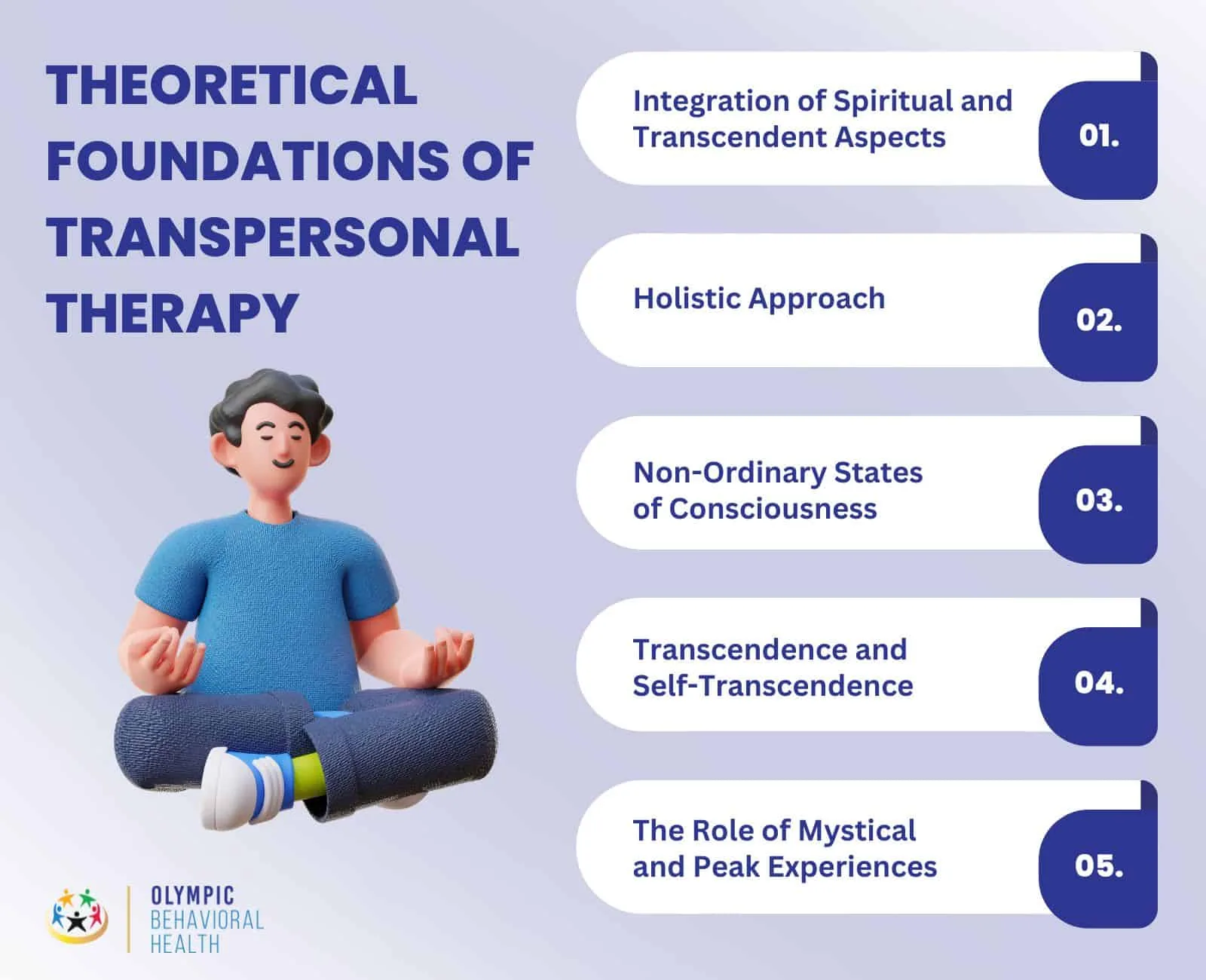
The following 5 theories underpin the concept of transpersonal therapy, contributing to the effectiveness of this treatment method, according to Psychology Today. 2023. “Transpersonal Therapy”:
- Integration of Spiritual and Transcendent Aspects: Abraham Maslow’s concept of self-actualization and peak experiences suggests that individuals strive for higher states of consciousness and fulfillment. In transpersonal therapy, exploring these dimensions helps individuals achieve greater self-awareness and personal growth, facilitating profound psychological healing.
- Holistic Approach: Ken Wilber’s Integral Theory influences transpersonal therapy by promoting a holistic approach. This theory integrates physical, emotional, mental, and spiritual dimensions of human experience, ensuring that therapy addresses the entire person rather than isolated symptoms. This comprehensive approach enhances overall well-being and supports sustained recovery, as BetterHelp discussed in 2024. “What is Transpersonal Therapy?”
- Non-Ordinary States of Consciousness: Stanislav Grof’s research on holotropic breathwork and altered states of consciousness highlights their therapeutic potential. Accessing these states leads to profound insights and emotional healing, allowing individuals to confront and resolve deep-seated psychological issues more effectively, as mentioned by Psychology Today. 2023. “Transpersonal Therapy”:
- Transcendence and Self-Transcendence: Transpersonal therapy emphasizes the importance of transcendence, which involves moving beyond the ego to connect with greater meaning and purpose. Exploring mystical experiences and higher states of awareness helps individuals gain new perspectives, fostering a deeper sense of connection and personal fulfillment.
- The Role of Mystical and Peak Experiences: Theories surrounding mystical and peak experiences, characterized by unity and connection, are integral to personal development and spiritual growth. Incorporating these experiences into therapy helps individuals achieve inner peace and fulfillment, enhancing the overall effectiveness of the therapeutic process.
Transpersonal therapy offers a unique and effective approach to personal growth and healing. It addresses the whole person, incorporates non-ordinary states of consciousness, and complements traditional psychological methods.
How Does Transpersonal Therapy Work for Addiction Recovery?
Transpersonal therapy works by integrating emotional, psychological, and spiritual dimensions into a holistic therapeutic process to treat addiction. This approach treats the whole person, linking substance use to unresolved emotional pain, trauma, and a quest for spiritual fulfillment, as explained by PsychCentral. 2023, “Transpersonal Psychology: Principles and Applications.” 3 out of 4 people (75%) recover from addiction, according to research by the Centers for Disease Control and Prevention (CDC) published in Addiction Help 2024, “Addiction Recovery Statistics.”
A key aspect of Transpersonal Therapy is the therapist-client relationship, characterized by mutual respect and empathy. This relationship creates a safe, supportive environment that fosters trust and openness, allowing clients to explore their inner experiences and pursue personal growth.
Specific techniques used in transpersonal therapy include meditation, guided imagery, breathwork, and spiritual exploration. Meditation enhances mindfulness and self-awareness, reduces stress, and improves emotional regulation, helping clients build inner peace and resilience. Guided imagery involves visualization exercises to reframe addiction-related thoughts and behaviors, offering new perspectives and coping strategies, according to Psychology Today. 2022, “Transpersonal Therapy.” Breathwork and body awareness techniques help clients reconnect with physical sensations and manage cravings, while spiritual exploration addresses personal values and existential questions, aiding in long-term recovery.
Key Techniques in Transpersonal Therapy for Addiction
Transpersonal therapy employs meditation, guided imagery, and mindfulness practices to support addiction recovery. Meditation helps cultivate mindfulness and reduce stress, aiding in emotional regulation and overall well-being, according to Rimban E, Coloma M A, et al. 2024, “Exploring the Role of Mindfulness Meditation in Transpersonal Psychology.” Guided imagery involves visualization exercises that help clients reframe their addiction-related thoughts and develop positive coping strategies, which is effective in managing cravings. Mindfulness practices, as a part of transpersonal therapy, encourage individuals to stay present and aware, improving their ability to handle stress and cravings and reducing relapse rates, as discussed by Johnson D et al. 2019, “Mindfulness and Transpersonal Psychology: Two Trends Between Psychotherapy and Spirituality.”
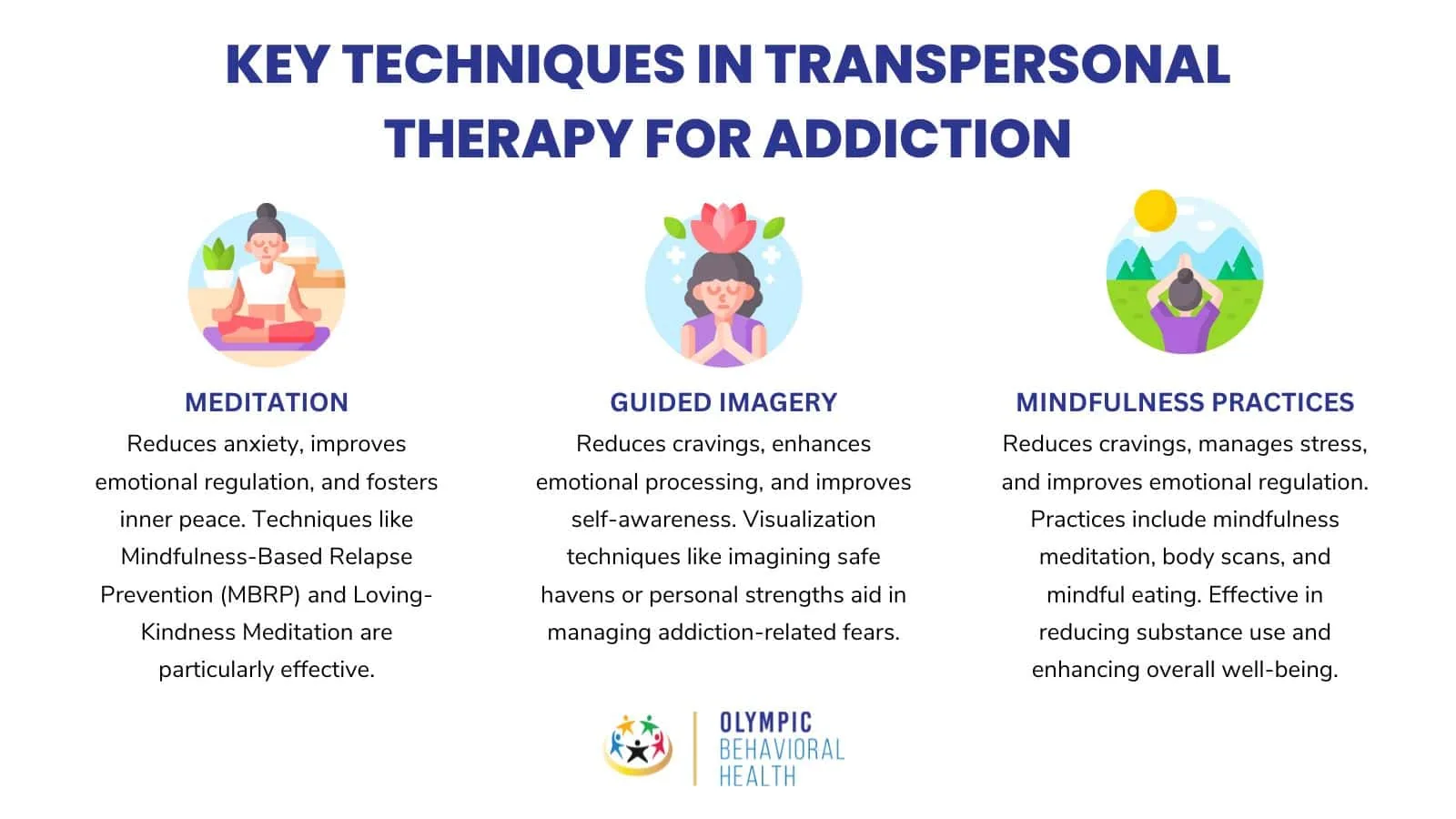
The following 3 key techniques in transpersonal therapy are considered effective in treating addiction:
- Meditation
- Guided Imagery
- Mindfulness Practices
1. Meditation
In Transpersonal Therapy, meditation plays a pivotal role in helping clients connect with their inner selves and navigate the challenges of addiction. This technique fosters a deeper awareness of thoughts, emotions, and spiritual dimensions, offering transformative benefits during the recovery process. Meditation supports addiction recovery by managing cravings, enhancing self-awareness, and fostering inner peace.
Meditation encourages self-reflection and spiritual growth, providing clients with tools to explore their inner landscape and address the root causes of their addiction, as discussed by Carlson B. et al. 2009, “Meditation as a Coping Intervention for Treatment of Addiction.” By promoting mindfulness, meditation helps individuals gain insights into their behaviors and emotional patterns, facilitating a stronger connection with themselves and their recovery goals.
Mindfulness-Based Relapse Prevention (MBRP), for instance, combines mindfulness meditation with cognitive-behavioral techniques. MBRP significantly reduces cravings and improves emotional regulation, with participants reporting heightened self-awareness and better stress-coping mechanisms, according to Psychology Today. 2023, “Applying Mindfulness in Relapse Prevention.” Similarly, Loving-Kindness Meditation, which focuses on cultivating compassion towards oneself and others, has been shown to improve self-esteem and reduce feelings of guilt and shame in those struggling with addiction. Participants practicing loving-kindness meditation experienced enhanced self-image and greater resilience in recovery, as studied by GoodTherapy. 2009, “Mindful Self–Compassion in Clinical Practice.”
Body Scan Meditation, for example, involves directing attention to different body parts to increase awareness of physical and emotional states. The effectiveness in reducing anxiety and improving emotional regulation among individuals with substance use disorders shows that clients could better manage physical and emotional triggers associated with addiction, according to de Bruin, E.J., Meijer, A. & Bögels, S.M. et al. 2020, “The Contribution of a Body Scan Mindfulness Meditation to Effectiveness of Internet-Delivered CBT for Insomnia in Adolescents.”
Overall, meditation offers numerous benefits in addiction recovery, including enhanced self-awareness, stress reduction, improved emotional regulation, and increased resilience. Research supports its effectiveness, with studies showing that mindfulness meditation, in particular, can significantly reduce cravings and enhance emotional management, according to PsychCentral. 2023, “10 Benefits of Meditation.” By fostering a non-reactive state of mind, meditation helps individuals effectively manage triggers and cravings, making it a valuable component of Transpersonal Therapy.
2. Guided Imagery
Guided imagery is a valuable technique in Transpersonal Therapy. It is designed to help individuals connect with their inner selves and address addiction. This approach utilizes mental imagery to guide clients through structured visualizations aimed at promoting relaxation, self-discovery, and emotional healing. In practice, guided imagery involves therapists leading clients through visualizations of calming or empowering scenarios, according to Psychology Today. 2023, “The Science Behind Imagery and Visualisation.” This technique helps individuals explore their subconscious mind, process emotions related to addiction, and develop effective coping strategies. Guided imagery enables clients to access their inner resources and resolve conflicts that contribute to their addiction.
The guided imagery enhances emotional processing by allowing clients to confront and understand their feelings in a controlled environment. This process aids in stress reduction, a critical factor in managing cravings and avoiding relapse. Additionally, guided imagery improves self-awareness, helping clients develop a clearer understanding of their thoughts and motivations, which supports their recovery journey.
Practical applications of guided imagery include visualizations of safe havens or personal strengths, as discussed by PsychCentral. 2023, “Exploring the Benefits and Techniques of Guided Imagery.” For instance, a client might be guided to imagine a serene beach to address their addiction-related fears or visualize themselves successfully managing a craving to build confidence. Such exercises help clients confront and reframe their addiction-related experiences.
A study published in Zgierska A, Rabago D, Chawla N, Kushner K, Koehler R, Marlatt A., et al. 2009, “Mindfulness meditation for substance use disorders: a systematic review,” found that guided imagery led to a 35% reduction in substance use cravings and a 27% improvement in emotional regulation among participants. This study demonstrated the significant impact of guided imagery on enhancing emotional well-being and managing addiction triggers.
3. Mindfulness Practices
Mindfulness practices play a crucial role in transpersonal therapy for addiction recovery, offering a foundational approach through present-moment awareness and self-regulation. In Transpersonal Therapy, mindfulness is used to increase awareness of triggers, enhance emotional regulation, and promote self-compassion. By recognizing internal and external triggers, individuals manage their responses and avoid relapse. It allows clients to observe their emotions without being overwhelmed, reduce cravings, and manage stress, which is critical in recovery.
Improved emotional regulation is another significant benefit, with mindfulness-based stress reduction (MBSR) linked to reduced symptoms of depression and anxiety, often co-occurring issues in addiction recovery, according to Psychology Today. 2010, “Mindfulness-Based Stress Reduction: What It Is, How It Helps.” Regular mindfulness practice also leads to an improved quality of life, with increased satisfaction, better relationships, and greater overall well-being.
Practical applications of mindfulness in addiction recovery include mindfulness meditation, body scan, and mindful eating. Mindfulness meditation involves clients sitting quietly and focusing on their breath, bodily sensations, or specific thoughts, helping them anchor in the present moment and manage cravings. For example, a client with alcohol addiction might focus on their breath during cravings, helping them recognize and manage these urges without acting on them. Body scan involves paying close attention to different body parts to increase bodily awareness and relaxation, assisting clients to manage stress and cravings.
Mindfulness practices are effective in addiction treatment by enhancing self-control and resilience. Mindfulness-based interventions significantly reduce substance use and improve mental health by helping clients manage stress and emotional triggers, as claimed by Garland EL, Howard MO. et al. 2018, “Mindfulness-based treatment of addiction: current state of the field and envisioning the next wave of research.” Mindfulness programs reduce patient dropout rates by 59% and relapses by 42%, according to a Rutgers-led research published in News Medical Life Sciences 2024, “Mindfulness training reduces dropout rates and relapses in opioid addiction treatment.”
Benefits of Transpersonal Therapy for Addiction Treatment
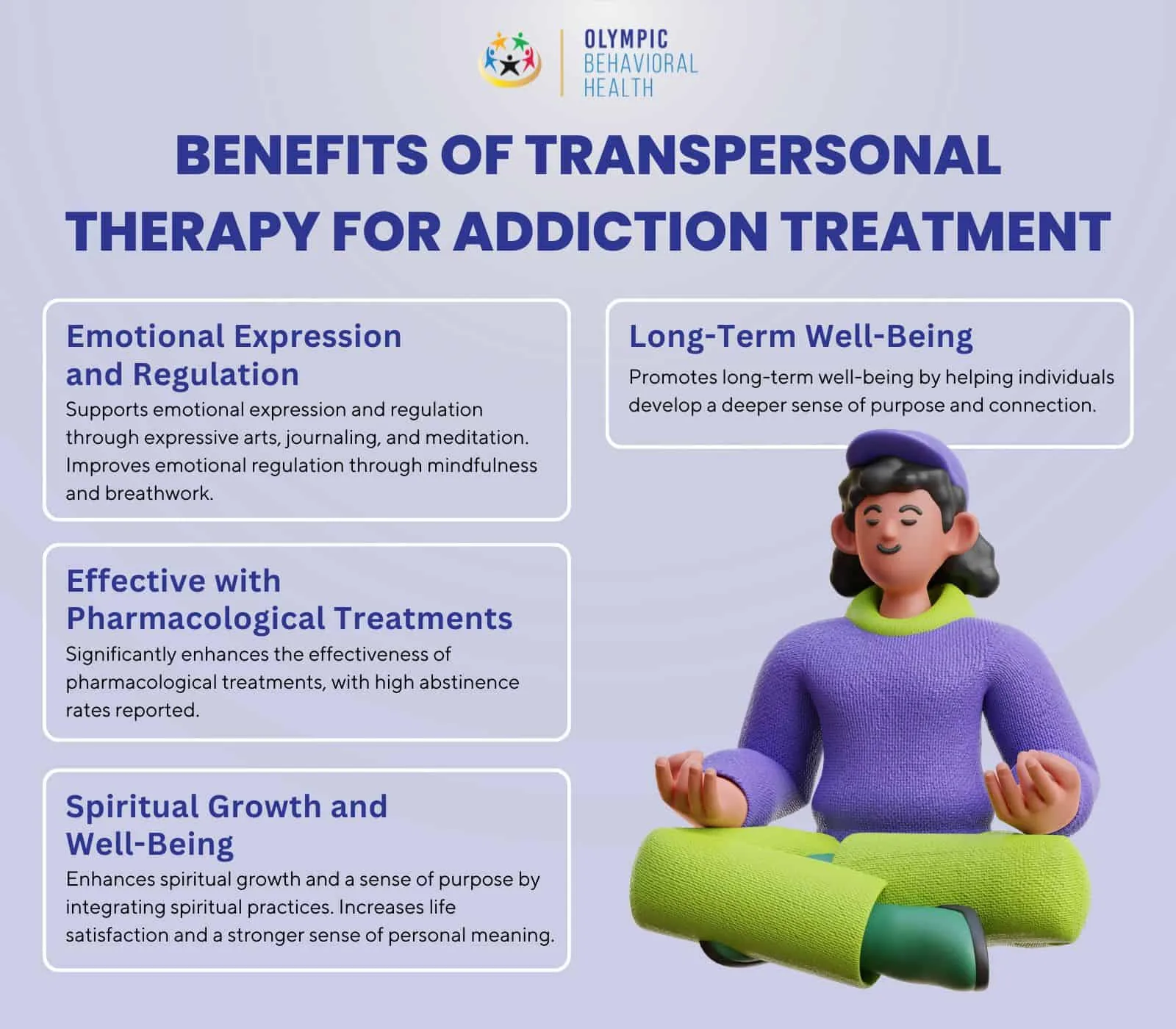
Transpersonal therapy addresses the underlying emotional, psychological, and spiritual dimensions. This holistic approach integrates psychological techniques with spiritual practices to foster profound healing and personal growth, significantly improving emotional regulation in individuals dealing with addiction. Mindfulness and other therapeutic methods used in this approach reduce emotional distress and enhance emotional regulation. Mindfulness-based therapies are increasingly used for the prevention of relapse in depression as a co-occurring mental disorder of substance abuse, as mentioned by Psychology Today. 2023, “What’s the Evidence for Mindfulness for Depression?”
Another notable benefit of transpersonal therapy is its focus on spiritual growth and well-being. By helping clients connect with their spiritual selves, this therapy is crucial for those seeking meaning and purpose beyond their addiction. Integrating spiritual practices into therapy leads to increased life satisfaction and a stronger sense of personal meaning, both essential for sustained recovery, according to BetterHelp. 2023, “Spiritual practices in Transpersonal Psychology.”
Preliminary findings have been supported by case studies demonstrating the successful use of transpersonal therapy in conjunction with ketamine for treating alcoholism. For instance, a survey by McAndrew, A., Lawn, W., Stevens, T., et al. 2017, “A proof-of-concept investigation into ketamine as a pharmacological treatment for alcohol dependence: study protocol for a randomized controlled trial,” reported that patients undergoing transpersonal therapy achieved a 70% abstinence rate at one year. This suggests that transpersonal therapy significantly enhances the effectiveness of pharmacological treatments.
Emotional Expression and Regulation
Transpersonal therapy supports emotional expression and regulation through techniques such as expressive arts, journaling, and meditation, as mentioned in Mitchell S. Kossak M S et al. 2009, “Therapeutic attunement: A transpersonal view of expressive arts therapy.” Expressive arts like painting or music provide clients with creative outlets to articulate and process complex emotions, as discussed by Johan S et al. 2022, “Effectiveness of Expressive Art Therapy Module in Group Counseling Sessions for Depression and Anxiety Adolescents.”
Emotional regulation is further enhanced through mindfulness and breathwork, an integral part of Transpersonal Therapy.Guendelman S, Medeiros S, Rampes H. et al. 2017, “Mindfulness and Emotion Regulation: Insights from Neurobiological, Psychological, and Clinical Studies.” Mindfulness practices, which involve paying non-judgmental attention to the present moment, help clients become more aware of their emotions and reduce reactivity. Mindfulness practices significantly decrease emotional reactivity and improve self-regulation, which is crucial for managing the emotional upheaval associated with addiction, as discussed by Johnson D et al. 2019, “Mindfulness and Transpersonal Psychology: Two Trends Between Psychotherapy and Spirituality.” Additionally, breathwork techniques like holotropic breathwork promote relaxation and help manage physiological stress responses, further supporting emotional regulation according to Grof S et al. 2014, “Holotropic Breathwork: A New Experiential Method of Psychotherapy and Self-Exploration.”
Spiritual Growth and Well-Being
Transpersonal therapy significantly contributes to spiritual growth and overall well-being in individuals recovering from addiction by integrating spiritual practices and fostering a deeper sense of connection and purpose, as mentioned in a research paper, “Transpersonal Perspectives in Psychotherapy,” 1977 in Sage Journal. Clients often experience enhanced spiritual connection and a more profound understanding of their place in the world through practices such as meditation and guided imagery.
Case studies “Spiritual Self-Care – A Transpersonal Approach to Mental Health,” published in 2024 in GoodTherapy, further illustrate that transpersonal therapy helps clients experience substantial improvements in spiritual well-being, a stronger sense of inner peace and fulfillment, and a greater connection to their spiritual selves. The integration of spiritual practices into therapy not only supports recovery but also promotes long-term well-being by helping individuals develop a deeper sense of purpose and connection, as discussed by Rathore, L. N., & Kriplani, V. et al. 2023, “Integrating spirituality into psychotherapy practice in mental health: Ethical issues, challenges, and possible way out.”
Transpersonal Therapy Programs for Addiction
Transpersonal therapy programs for addiction recovery include the Integral Recovery Program, the Center for Transpersonal Therapy, the Hoffman Process, the Phoenix Recovery Center, and various Addiction Recovery Retreats. These programs feature structured components such as integrative counseling sessions, spiritual practices, and personal development workshops. Key elements include mindfulness training, guided imagery, and group therapy, all aimed at addressing the psychological and spiritual dimensions of addiction, as discussed in detail by Psychology Today, 2022, “Transpersonal Therapy.”
Program Structures
Transpersonal Therapy programs for addiction follow a structured approach that integrates individual and group therapy, spiritual practices, and holistic treatments. These programs offer weekly individual therapy sessions lasting 50 minutes to a couple of hours, complemented by group therapy sessions held several times a week for 1.5 to 2 hours as described by Mireault G et al. 2008, “Journal of Transpersonal Psychology.”
Programs also incorporate daily or bi-weekly spiritual practices, such as meditation or yoga, and 10 minutes per session to enhance the therapeutic process, according to Psychology Today. 2024, “Choosing a Meditation That Works for You.” For instance, the Hazelden Betty Ford Foundation offers a comprehensive approach that includes individual and group therapy alongside spiritual practices like meditation as part of its “Outpatient Drug and Alcohol Rehab” treatment programs. Similarly, the Caron Treatment Centers offer a structured program incorporating individual and group therapy with complementary spiritual practices, including meditation and mindfulness, to address both psychological and spiritual aspects of addiction.
Key Components of Transpersonal Therapy Programs
Transpersonal therapy programs for addiction incorporate several key components to facilitate comprehensive recovery, including individual therapy, group therapy, spiritual practices, and holistic approaches.
The key components of transpersonal therapy programs are as follows:
- Individual Therapy: Individual therapy involves one-on-one sessions where clients explore personal issues related to their addiction, integrating spiritual practices with psychological techniques. This approach helps address underlying emotional and spiritual wounds, enhancing personal insight and healing, according to Shechtman Z. et al. l. 2016, “Why Do People Prefer Individual Therapy Over Group Therapy?”
- Group Sessions: Group sessions offer a communal space where clients share experiences and support one another, often including mindfulness practices and spiritual discussions. These sessions foster a sense of community and collective growth, according to Coco G. L. et al. 2019, “Group treatment for substance use disorder in adults: A systematic review and meta-analysis of randomized controlled trials.”
- Spiritual Practices: spiritual practices such as meditation, yoga, and guided imagery are central to Transpersonal Therapy. They aid clients in developing a deeper connection with their inner selves and achieving spiritual well-being. These practices are essential for emotional stability and personal transformation, as mentioned by Psych Central. 2022, “Transpersonal Psychology: Principles and Applications.”
What are the Challenges and Controversies in Transpersonal Therapy for Addiction?
Transpersonal therapy faces several significant challenges and controversies, primarily revolving around scientific validation and integration with conventional treatments for addiction recovery, according to Kasprow MC, Scotton BW. et al. 1999, “A review of transpersonal theory and its application to the practice of psychotherapy.”
The following challenges are faced by existential therapy for addiction:
Lack of Empirical Evidence
One major challenge is the need for robust empirical evidence to substantiate the effectiveness of Transpersonal Therapy. Despite positive anecdotal evidence and case studies, scientific validation still needs to be improved, affecting the therapy’s credibility and acceptance. Only 15% of reviewed studies on spiritual approaches in addiction therapy provided robust empirical data, according to a study by the Journal of Substance Abuse Treatment, 2023, “Addiction Recovery.”
Integration with Conventional Treatments
Integrating transpersonal therapy with conventional treatments poses another challenge. Professionals are concerned that blending spiritual practices with established evidence-based therapies might undermine the latter’s effectiveness, as explained by Richards RS et al. 2010, “The Need for Evidence-Based, Spiritually Oriented Psychotherapies.”
Public Skepticism and Stigma
Controversies surrounding transpersonal therapy also include public opinion and policy-related issues. The incorporation of spiritual elements in therapy often encounters skepticism and stigma, with some viewing it as unconventional or unscientific. This stigma affects the therapy’s acceptance and adoption within mainstream addiction treatment settings, according to a study by Abrams Z. et al. 2023, “Can religion and spirituality have a place in therapy? Experts say yes.”
Policy and Regulatory Challenges
Additionally, policy and regulatory challenges arise from the need for standardized guidelines for Transpersonal Therapy. This variability leads to inconsistent application and potential ethical issues, such as difficulties in obtaining insurance coverage for spiritual practices in therapy, as noted by Cunningham PF et al. 2007, “The Challenges, Prospects, and Promise of Transpersonal Psychology.”
What is the Future of Transpersonal Therapy for Addiction?
The future of transpersonal therapy in addiction treatment is likely to be shaped by significant advancements, particularly in research and integration with conventional therapies. Rigorous scientific studies are required to validate the effectiveness of this approach. For instance, the article in the Journal of Substance Abuse Treatment 2023, “The Need for Empirical Validation of Spiritual Approaches in Addiction Therapy,” underscores the importance of data-driven evaluations to establish the therapy’s benefits. This focus on empirical research aims to enhance the therapy’s credibility and integrate it more effectively with established treatment modalities.
In addition, the integration of transpersonal therapy with cognitive-behavioral therapy (CBT) and pharmacotherapy is gaining traction. According to the review in the Journal of Clinical Psychology 2023, “Combining Spiritual and Psychological Approaches in Addiction Treatment,” merging these methods improves treatment outcomes by addressing both the psychological and spiritual aspects of addiction. Technological innovations such as virtual reality (VR) and mobile apps are also expected to enhance therapeutic techniques, according to the International Journal of Behavioral Medicine 2023, “Virtual Reality and Mobile Apps in Transpersonal Therapy,” highlighting their potential to support relaxation and engagement in therapy.
What Should I Expect in a Transpersonal Therapy Session?
You should expect a structured approach that involves several key steps from a Transpersonal Session. Initially, the therapist conducts an assessment to understand your current issues and therapeutic needs, often through interviews and standardized questionnaires, according to PsychCentral. 2022, “Transpersonal Psychology: Principles and Applications.” This is followed by goal-setting, where you and your therapist collaboratively identify and define specific objectives for your therapy, focusing on both psychological and spiritual aspects of healing according to Sperry, L. et al. 2016, “Handbook of Diagnosis and Treatment of DSM-5 Personality Disorders.” During the intervention phase, the therapist employs various techniques, such as meditation, guided imagery, and mindfulness practices, to help you explore and address deeper emotional and spiritual concerns, according to PsychCentral. 2022, “Transpersonal Psychology: Principles and Applications .” These interventions are designed to facilitate personal insight and growth, supporting overall well-being and recovery.
How Long Does Transpersonal Therapy Take?
The duration of transpersonal therapy varies significantly depending on individual needs and the nature of the issues being addressed. Transpersonal therapy involves a commitment of several months to a year, with sessions often occurring weekly or bi-weekly, according to Sperry, L. et al. 2016, “Handbook of Diagnosis and Treatment of DSM-5 Personality Disorders.” The length of transpersonal therapy treatment is influenced by factors such as the complexity of the mental health issues, personal goals, and the client’s response to therapy. For example, individuals dealing with acute anxiety or depression require more extended sessions and a longer treatment period compared to those seeking general personal growth or spiritual exploration, according to Gilot L B et al. 2003, “Integral Approach in Transpersonal Psychotherapy Integral Approach in Transpersonal Psychotherapy.” Tiemens B, Kloos M, Spijker J, Ingenhoven T, Kampman M, Hendriks GJ. et al. 2019, “Lower versus higher frequency of sessions in starting outpatient mental health care and the risk of a chronic course; a naturalistic cohort study,” indicate that while some clients see improvements in as few as 8-12 sessions, others benefit from ongoing therapy over a longer term.
What are the core principles of Transpersonal Therapy?
Transpersonal therapy integrates spiritual and psychological healing, focusing on personal growth beyond traditional therapy. It employs techniques such as meditation, mindfulness, and exploration of spiritual experiences to enhance self-awareness and well-being. These principles aim to address the full spectrum of human experience, including spiritual dimensions, according to The Wiley-Blackwell Handbook of Transpersonal Psychology. 2013.
How does Transpersonal Therapy differ from traditional psychotherapy?
Transpersonal therapy differs from traditional psychotherapy by emphasizing spiritual and existential aspects of healing in addition to psychological symptoms. It incorporates techniques like guided imagery and mindfulness to explore deeper dimensions of self, as explained by Kasprow MC and Scotton BW. et al. 1999, “A review of transpersonal theory and its application to the practice of psychotherapy.”
Can Transpersonal Therapy be combined with other forms of treatment?
Transpersonal therapy can be combined with other treatments, such as conventional psychotherapy, medication, and holistic therapies, to address both psychological and spiritual needs. Integrative approaches are supported by research in Gold, J., & Stricker, G. et al. 2020, “Integrative approaches to psychotherapy.
Is Transpersonal Therapy suitable for everyone?
Transpersonal therapy is suitable for everyone. Its effectiveness depends on individual openness to exploring spiritual dimensions alongside psychological healing, according to Lajoie, D. H., & Shapiro, S. I. et al. 1992, “On defining transpersonal psychology.” It is particularly beneficial for those seeking holistic and spiritual growth.
What should I look for in a qualified Transpersonal Therapist?
When choosing a transpersonal therapist, ensure they have qualifications in both traditional psychotherapy and transpersonal approaches. Look for experience with spiritual practices and a compassionate, client-centered approach. O’Donohue W, Ferguson K E, et al. 2003, “Handbook of Professional Ethics for Psychologists” emphasizes the importance of verifying a therapist’s credentials and approach to ensure they align with your therapeutic needs.
Check Your Insurance Coverage
Our addiction treatment center is committed to helping those recovering from drug and alcohol addiction. We provide professional care and support to help you start your healing journey.
Olympic Behavioral Health works with most PPO plans on an out-of-network basis. We verify your benefits before admission so you know what to expect.
Please note that while we provide top-tier services, some major insurance plans may not include us in their network.
If you’re unsure about your coverage options or would like to learn more about available treatments, give us a call at 561-272-0800. Our team is available to assist you!
