Xanax Addiction: Symptoms, Withdrawal, Treatment and Recovery

Xanax (alprazolam) addiction represents one of the most dangerous benzodiazepine dependencies due to the medication’s rapid onset and short duration of action. The Centers for Disease Control and Prevention reported that between 2003 and 2009, alprazolam experienced a 234% death rate increase, the highest among all benzodiazepines, making it the second-highest contributor to benzodiazepine-related deaths.
Xanax is a short-acting benzodiazepine prescribed for anxiety and panic disorders that works by enhancing GABA neurotransmitter activity, producing immediate anxiety relief within 15-30 minutes, but creating powerful addiction potential through its 11-hour half-life, causing frequent rebound anxiety.
Xanax withdrawal symptoms begin within 6-12 hours and include severe anxiety, insomnia, tremors, and potentially fatal seizures requiring medically supervised tapering over weeks or months. Treatment combines gradual dose reduction using protocols that prevent dangerous withdrawal complications with cognitive-behavioral therapy addressing underlying anxiety disorders and psychological dependence patterns.
Highlights
- Alprazolam (Xanax) had a 234% death rate increase between 2003 and 2009, the highest among benzodiazepines according to CDC data, with over 75% of Xanax-related deaths involving concurrent opioid use.
- Physical dependence on Xanax develops within 2-4 weeks of regular daily use due to its 11-hour half-life, causing rapid GABA receptor downregulation and rebound anxiety between doses.
- Xanax withdrawal begins 6-12 hours after last use and can cause life-threatening seizures, requiring medically supervised tapering with 5-10% dose reductions every 1-2 weeks.
- Kurtz’s 2017 study found 12.6% of young adults in Florida’s electronic dance music scene are benzodiazepine dependent, with 24.2% showing abuse patterns.
- Xanax addiction symptoms include tolerance requiring higher doses, unsuccessful quit attempts, obsessive medication-seeking behavior, continued use despite consequences, and withdrawal symptoms when reducing dosage.
Did you know most health insurance plans cover substance use disorder treatment? Check your coverage online now.
What Is Xanax Addiction?
Xanax addiction is a substance use disorder marked by compulsive alprazolam use despite negative health, psychological, or life consequences. It develops when repeated Xanax use changes brain chemistry, leading to tolerance, physical dependence, and an inability to stop or control use without distress.
Because Xanax is a fast-acting, short-duration benzodiazepine, it produces rapid calming and euphoric effects by intensifying GABA activity in the brain. Over time, the brain adapts by reducing its natural inhibitory function, making Xanax necessary to feel normal. As blood levels drop quickly, users often experience rebound anxiety, irritability, or panic, which drives frequent redosing and accelerates addiction.
Is Xanax Addictive?
Yes, Xanax (alprazolam) is highly addictive and represents one of the most addiction-prone medications within the benzodiazepine class. The National Institute on Drug Abuse reports that approximately 17.2% of benzodiazepine users engage in misuse patterns, with Xanax showing higher rates than longer-acting formulations due to its pharmacological properties, creating ideal addiction conditions.

What Are the Signs of Xanax Addiction?
Signs of Xanax addiction encompass behavioral, physical, and psychological indicators appearing as alprazolam use disorder progresses. Early recognition enables intervention before severe consequences, including cognitive impairment, overdose, or life-threatening withdrawal complications, occur.
The behavioral signs of Xanax addiction are as follows:
Doctor shopping is visiting multiple healthcare providers to obtain overlapping prescriptions simultaneously
Seeking early refills by claiming medications were lost, stolen, or used faster than prescribed
Using Xanax in dangerous situations like driving, operating machinery, or caring for children
Obtaining alprazolam through illegal sources, including street dealers or online pharmacies, withouta valid prescription
Continued use despite negative consequences affecting health, relationships, work, or legal standing
Social withdrawal and isolation from family and friends to hide drug use patterns
Neglecting responsibilities at work, school, or home, as obtaining medication becomes the primary focus
Deceptive behavior, including lying about use, hiding pills, and concealing the extent of consumption
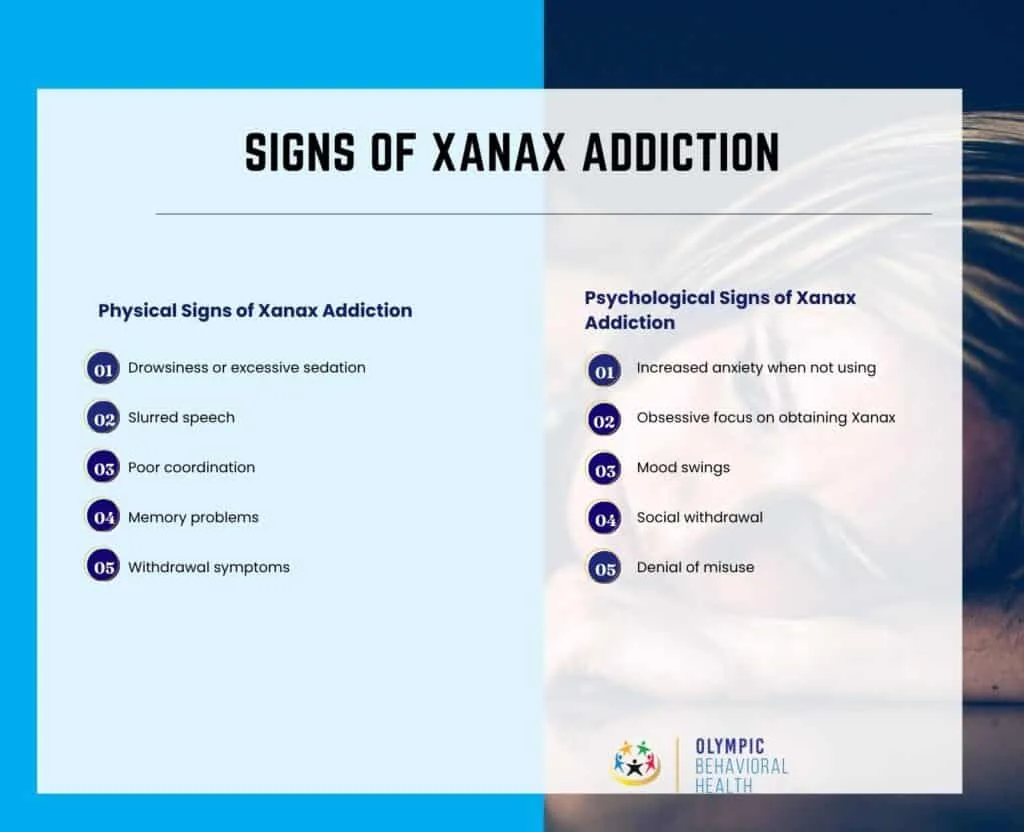
The physical signs of Xanax addiction are as follows:
- Extreme drowsiness and sedation with frequent “nodding off” during daytime activities
- Slurred or slowed speech patterns resembling alcohol intoxication
- Impaired coordination causing unsteady gait, stumbling, and difficulty with motor tasks
- Memory blackouts and gaps in recall make it difficult to remember events during intoxication
- Poor hygiene and neglected appearance as self-care becomes a lower priority
- Tremors and shaking are particularly noticeable when withdrawal begins between doses
- Dizziness and lightheadedness affecting balance and spatial orientation
The psychological signs of Xanax addiction are as follows:
- Rebound anxiety is becoming progressively worse than the original symptoms, occurring between doses
- Obsessive focus on obtaining and using Xanax, dominating thoughts and mental energy
- Mood swings alternating between calm during drug effects and irritability as effects wear off
- Denial about addiction severity despite obvious consequences affecting life functioning
- Panic attacks are increasing in frequency when unable to access medication
- Depression and hopelessness, particularly during withdrawal periods
- Difficulty concentrating and cognitive impairment affecting decision-making abilities
Contact us today to schedule an initial assessment or to learn more about our services. Whether you are seeking intensive outpatient care or simply need guidance on your mental health journey, we are here to help.
What Are Xanax Withdrawal Symptoms?
Xanax withdrawal symptoms begin within 6-12 hours of last use due to alprazolam’s short 11-hour half-life, producing one of the most dangerous withdrawal syndromes among substance classes. Withdrawal can cause life-threatening seizures, requiring medical supervision during any cessation attempt. Severity depends on usage duration, dosage amounts, individual physiology, and whether abrupt stopping or gradual tapering occurs.
The withdrawal symptoms of Xanax addiction are as follows:
- Severe rebound anxiety exceeding the original anxiety symptoms that prompted the initial prescription
- Insomnia ranging from difficulty falling asleep to complete inability to sleep for days
- Tremors and muscle twitching are particularly affecting the hands, arms, and legs
- Seizures (grand mal) represent the most dangerous complication, potentially fatal without medical intervention
- Sweating and temperature regulation problems are causing alternating chills and hot flashes
- Rapid heartbeat (tachycardia) and palpitations create feelings of an impending heart attack
- Nausea, vomiting, and loss of appetite
- Headaches ranging from mild tension headaches to severe migraines
- Increased sensitivity to light, sound, and touch, causing sensory overload
- Confusion and disorientation regarding time and place
- Depression and feelings of hopelessness about recovery prospects
- Panic attacks are occurring with increased frequency and intensity
Protracted withdrawal syndrome affects 10-25% of long-term Xanax users, involving persistent symptoms continuing weeks or months after acute withdrawal resolves.
What is an Xanax Overdose?
Xanax overdose occurs when someone consumes more alprazolam than their body can safely process, causing dangerous central nervous system depression. The Centers for Disease Control and Prevention reports benzodiazepines were involved in over 12,000 overdose deaths in 2020, with 75% involving concurrent opioid use, creating synergistic fatal effects.
Common Xanax overdose symptoms include extreme drowsiness and inability to stay awake, confusion and disorientation, slurred speech and difficulty communicating, impaired coordination and inability to walk, slowed or shallow breathing (respiratory depression), weak pulse and low blood pressure, bluish lips or fingernails (cyanosis) indicating oxygen deprivation, and unresponsiveness or coma in severe cases.
Mixing Xanax with Alcohol and Other Drugs
Combining Xanax with other central nervous system depressants is the primary cause of alprazolam-related deaths. Polysubstance use produces synergistic effects where drug interactions multiply dangers far beyond either substance alone.
Mixing Xanax and alcohol creates profound CNS depression as both enhance GABA activity through different mechanisms. This combination produces extreme sedation, respiratory depression, loss of consciousness, and potentially fatal overdose. The combined cognitive impairment severely affects judgment and coordination, significantly increasing accident risks, including falls and motor vehicle crashes.
The combination of Xanax with opioids represents the deadliest interaction, accounting for over 75% of benzodiazepine-related overdose deaths. Both substance classes depress respiration through different mechanisms; opioids reduce respiratory drive, while benzos relax breathing muscles. Together, they can completely halt respiration within minutes. Many individuals receive concurrent prescriptions from different doctors without coordination, creating unintentional lethal exposure.
Mixing Xanax with other CNS depressants, including barbiturates, muscle relaxants, sleep medications, or gabapentinoids, multiplies sedation and respiratory depression risks. Even over-the-counter medications like diphenhydramine (Benadryl) can potentiate Xanax effects dangerously.
Rediscover Life at Olympic Behavioral Health
Get the compassionate support you deserve. We're here to help you reclaim joy, wellness, and a brighter future.
Our Facility
What Are Xanax Addiction Treatment Options?
Xanax addiction treatment requires medically supervised tapering as the only safe withdrawal method, combined with behavioral therapies addressing underlying psychological factors and co-occurring conditions. Abrupt cessation causes fatal seizures, making gradual dose reduction under medical supervision absolutely essential.
The following are the xanax addiction treatment options:

Medically Supervised Xanax Tapering
Xanax tapering involves gradually reducing dosage over weeks or months, typically decreasing by 5-10% every 1-2 weeks, depending on individual tolerance and symptom severity. Healthcare providers may switch patients from short-acting Xanax to equivalent doses of long-acting diazepam (Valium) before beginning taper, as longer half-lives smooth withdrawal symptoms and reduce seizure risk. Medical supervision enables vital sign monitoring, reduction schedule adjustments based on symptoms, and immediate intervention if complications arise.
Cognitive-Behavioral Therapy (CBT)
CBT teaches individuals to recognize and change negative thought patterns contributing to anxiety and Xanax dependence. Therapists work with clients to identify catastrophic thinking, challenge anxiety-provoking beliefs, and develop realistic perspectives on feared situations. Cognitive Behavioral Therapy includes exposure therapy, helping people face anxiety-provoking situations without medication, proving they can tolerate discomfort while anxiety naturally decreases over time.
Are you covered for treatment?

Olympic Behavioral Health is an approved provider for Blue Shield and Tufts while also accepting many other major insurance carriers.
Check Coverage Now!Anxiety Management Training
Learning non-pharmacological anxiety management provides alternatives to medication dependence. Techniques include progressive muscle relaxation, diaphragmatic breathing, guided imagery, and meditation. Regular practice reduces baseline anxiety while providing tools for managing acute episodes without Xanax.
Treatment Settings
Residential inpatient treatment provides 24/7 medical supervision in structured environments, suitable for severe addiction, dangerous withdrawal attempts, or co-occurring psychiatric conditions. Intensive outpatient programs (IOP) require 9-20 hours weekly while patients live at home and maintain responsibilities. Standard outpatient counseling involves 1-2 weekly sessions providing ongoing support for stable individuals in recovery.
Support Groups
Support groups, including Narcotics Anonymous, SMART Recovery, and Benzodiazepine Information Coalition, provide ongoing encouragement and community connections crucial for long-term recovery. Regular attendance improves abstinence rates and quality of life during extended recovery periods.
Frequently Asked Questions About Xanax Addiction
Does insurance cover Xanax addiction treatment?
Yes, most health insurance plans cover Xanax addiction treatment, including medically supervised tapering, inpatient residential care, outpatient programs, behavioral therapy, and psychiatric services. The Affordable Care Act requires insurers to cover mental health and substance use disorder treatment at parity with medical conditions. Coverage specifics vary by plan; therefore, individuals should verify benefits with their insurance providers. Medicare, Medicaid, and private insurers typically provide comprehensive coverage for addiction treatment.
What happens during Xanax detox?
Xanax detox involves gradual tapering over weeks or months rather than abrupt cessation. Healthcare providers slowly reduce dosage by 5-10% every 1-2 weeks, monitoring withdrawal symptoms and adjusting schedules accordingly. Patients may switch from Xanax to long-acting Valium for a smoother taper. Medical staff prescribes adjunct medications to manage symptoms and prevent seizures.
Is it illegal to possess Xanax without a prescription?
Yes, possessing Xanax without a valid prescription is illegal under federal and Florida state law. Alprazolam is a Schedule IV controlled substance, making unauthorized possession a criminal offense. Florida law classifies possession without prescription as a third-degree felony punishable by up to 5 years in prison, 5 years probation, and $5,000 in fines. Penalties increase for larger quantities or intent to distribute.
What does Xanax addiction look like?
Xanax addiction manifests through taking larger doses or using for longer periods than prescribed, unsuccessful attempts to quit or reduce despite wanting to stop, spending excessive time obtaining or using medication, neglecting work, school, or home responsibilities, continued use despite negative consequences, withdrawal symptoms when reducing dosage, needing increasingly higher doses for same effects (tolerance), using in dangerous situations, and secretive behavior hiding extent of use from others.
How quickly can you become addicted to Xanax?
Physical dependence on Xanax develops within 2-4 weeks of regular daily use, significantly faster than most other benzodiazepines due to its short half-life, creating frequent blood level fluctuations.
How long does Xanax stay in your system?
Xanax remains detectable in urine for 1-4 days after last use, in blood for 6-48 hours, in saliva for 1-2 days, and in hair follicles for up to 90 days. Detection windows vary based on dosage amounts, frequency of use, metabolism rate, and individual physiology. Chronic heavy users may test positive longer than occasional users.
How to tell if someone is on Xanax?
Physical signs indicating current Xanax intoxication include extreme drowsiness or sedation, slurred speech, impaired coordination and stumbling, confusion and disorientation, slowed reaction times, and memory problems. Behavioral indicators include unusual calmness in normally anxious individuals, decreased inhibitions, impaired judgment leading to risky decisions, and difficulty concentrating on conversations or tasks.
Can you die from Xanax withdrawal?
Yes, Xanax withdrawal can be fatal due to seizure risk during unsupervised cessation, particularly after long-term high-dose use or abrupt discontinuation. Grand mal seizures can cause brain damage, aspiration pneumonia, or direct fatality. Other dangerous complications include severe dehydration, cardiovascular problems, and suicide risk from severe anxiety and depression.
Sources
- Kurtz, S. P., Buttram, M. E., Surratt, H. L., & Stall, R. D. (2017). Benzodiazepine Dependence among Young Adult Participants in the Club Scene Who Use Drugs. Journal of Psychoactive Drugs, 49(1), 39-46.
- Centers for Disease Control and Prevention (CDC). (2011). Vital Signs: Overdoses of Prescription Opioid Pain Relievers – United States, 1999-2008. Morbidity and Mortality Weekly Report, 60(43), 1487-1492.
- National Institute on Drug Abuse (NIDA). (2023). Benzodiazepines and Opioids. National Institutes of Health.
- American Psychiatric Association. (2022). Diagnostic and Statistical Manual of Mental Disorders, Fifth Edition, Text Revision (DSM-5-TR). Washington, DC: American Psychiatric Publishing.
- Drug Enforcement Administration (DEA). (2023). Drug Scheduling and Controlled Substances. U.S. Department of Justice.
- Substance Abuse and Mental Health Services Administration (SAMHSA). (2022). Key Substance Use and Mental Health Indicators in the United States: Results from the 2021 National Survey on Drug Use and Health.
- Ashton, C. H. (2002). Benzodiazepines: How They Work and How to Withdraw (The Ashton Manual). Retrieved from benzo.org.uk.
- Lader, M., Tylee, A., & Donoghue, J. (2009). Withdrawing benzodiazepines in primary care. CNS Drugs, 23(1), 19-34.
- Ait-Daoud, N., Hamby, A. S., Sharma, S., & Blevins, D. (2018). A Review of Alprazolam Use, Misuse, and Withdrawal. Journal of Addiction Medicine, 12(1), 4-10.
- Brett, J., & Murnion, B. (2015). Management of benzodiazepine misuse and dependence. Australian Prescriber, 38(5), 152-155.
Share This Post

Adam Siegel
View profile
Lisa Alleva
View profile
Treatments we offer:
Are you covered for treatment?








Olympic Behavioral Health is an approved provider for Blue Shield and Tufts, while also accepting many other major insurance carriers.
Check Coverage Now!